
Understand Your Objectives Before Purchasing Your Access Control System

Before we talk about the reasons for using door access control, it’s important to understand your own requirements. It’s critical that you know your objectives. For many organizations the primary reason for installing a door access control system is to protect people, property, and information by controlling who can enter a facility, where they can go, and when they can enter. By understanding your requirements, it will help you select the right system.
Modern electronic access control systems provide several additional benefits beyond physical security. This article reviews some of the primary reasons for using door access control.
This article reviews some of the primary reasons for installing your own access control system.
1. Door Access Control Improve Security
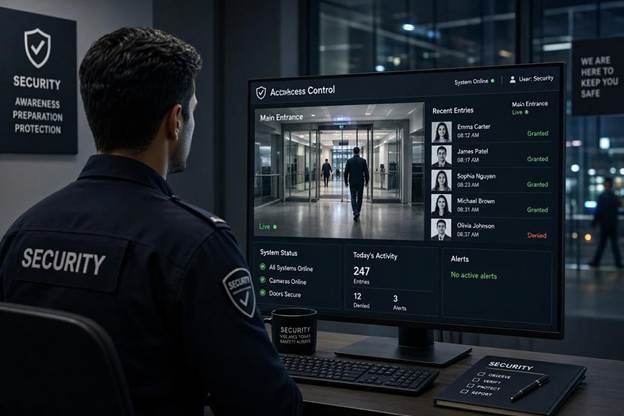
- Prevent unauthorized people from entering a facility.
- Restrict access to sensitive areas, such as server rooms, laboratories, and inventory storage.
- Reduce the risk of theft, vandalism, and workplace violence.
2. Restricting Access Improves Safety
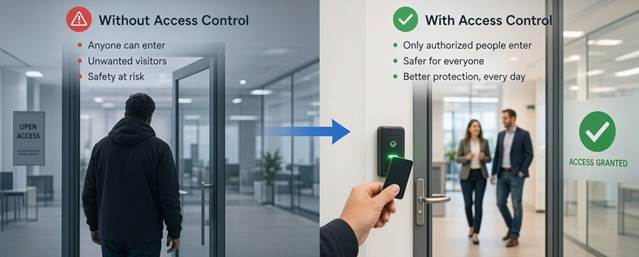
- Protect employees, students, patients, and visitors.
- Prevent unauthorized access to hazardous areas.
- Enable emergency lockdowns while maintaining required emergency egress.
- Integrate with other security and emergency management systems.
3. Eliminate the Problems Associated with Mechanical Keys

- Eliminate the need to replace locks when keys are lost or stolen.
- Immediately revoke access privileges when employees leave.
- Reduce the risk of unauthorized key duplication.
- Simplify the management of access credentials.
3. Access Control Determines Who Can Go Where and When
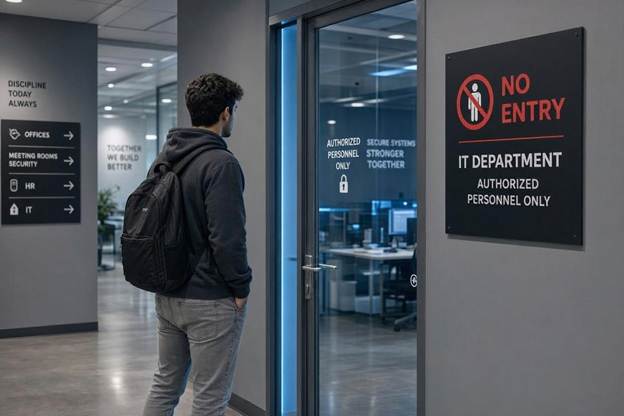
- Assign access privileges based on job responsibilities.
- Establish different access schedules for employees, contractors, and visitors.
- Manage multiple buildings from a central location.
- Remotely grant or revoke access.
5. Monitor and Record Access Activity
- Maintain an audit trail of who accessed specific doors and when.
- Investigate security incidents.
- Receive alerts when doors are forced open or held open.
- Identify unusual access activity.
6. Improve Operational Efficiency
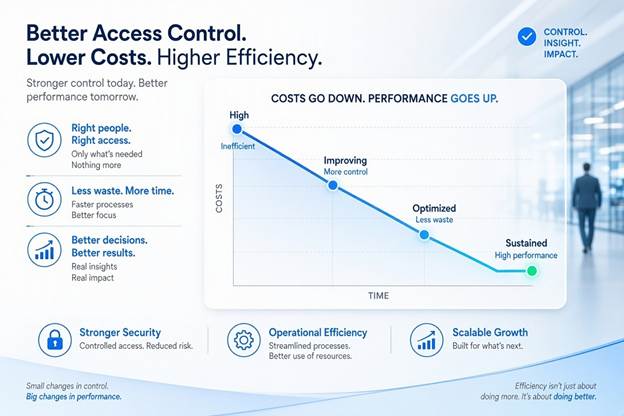
- Reduce the administrative costs associated with managing keys.
- Automatically lock and unlock doors according to schedules.
- Simplify employee onboarding and termination.
- Reduce the need for personnel to manage entrances.
7. Support Regulatory Compliance
- Protect confidential information and sensitive assets.
- Document access to restricted areas.
- Support industry-specific security and auditing requirements.
8. Integrate with Other Security Systems
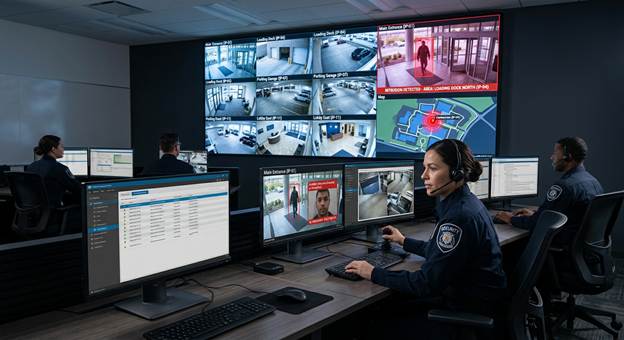
- Integrate with IP surveillance cameras to provide visual verification of access events.
- Connect with IP intercoms to manage visitors.
- Integrate with intrusion detection, visitor management, and emergency notification systems.
What Motivates an Organization to Purchase Access Control?
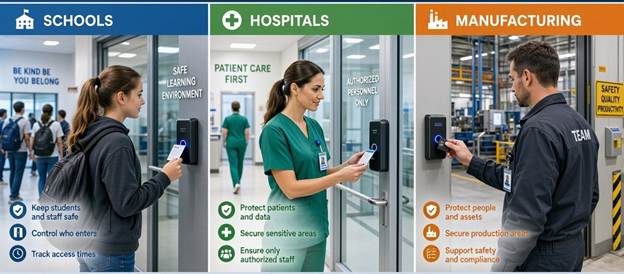
Different organizations have different priorities.
| Organization | Primary motivation |
| Schools | Protect students and staff |
| Hospitals | Protect patients and restrict access to sensitive areas |
| Manufacturing facilities | Protect employees, equipment, and intellectual property |
| Commercial offices | Manage employee access and protect assets |
| Apartment buildings | Improve resident security and convenience |
| Data centers | Protect critical infrastructure and information |
| Retail businesses | Reduce theft and restrict access to inventory |
| Government facilities | Improve security and support regulatory compliance |
The Bottom Line
The benefits of door access control can be summarized in four fundamental objectives:
- Protect people and assets.
- Reduce security risks and liability.
- Improve operational efficiency.
- Provide greater visibility and control.
When selecting a door access control system, the first question should not be “Which access control system should I purchase?” but rather “What problems am I trying to solve?”
Understanding these objectives helps determine the appropriate credentials, door controllers, management software, electric locks, and system integrations.
If you need help determining the best access control system for your organization, please get in touch with us at 914-944-3425, email dennis@kintronics.com, see our website Kintronics.com use our contact form.