
The PAN, Tilt, Zoom (PTZ) Camera Provides Versatile and Effective Surveillance
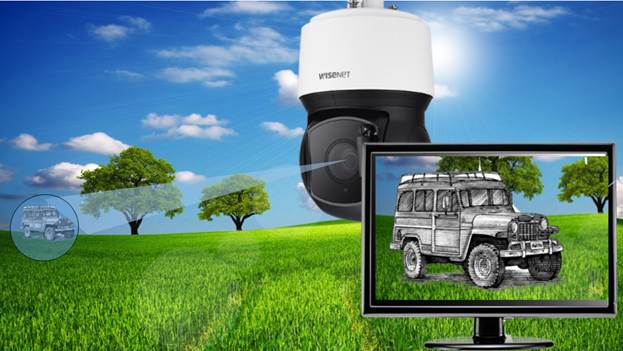
Do you want to detect objects many miles away? A PTZ (Pan-Tilt-Zoom) camera is ideal for the job. It is a flexible, powerful camera that enhances your IP Camera System.
This article describes how the PTZ camera works.
A PTZ camera is a motorized surveillance camera that combines optics, mechanics, electronics, and networking into a single device.
The latest Pan, Tilt, and Zoom (PTZ) cameras can see a person from almost a mile away. They can patrol a parking lot and zoom to see a license plate. Their low-light capability and added IR illumination allow you to provide surveillance even in low light. The optical PTZ cameras have built-in IR illumination, allowing you to see an object over 500m away in total darkness.
There are also thermal cameras that can see in total darkness. Some PTZ systems include both optical and thermal cameras, providing the flexibility of seeing in all conditions.
Custom-made PTZ cameras are very expensive. These cameras cost about 10 times as much as off-the-shelf PTZ cameras. The main difference between off-the-shelf and custom cameras is their operating range, especially at night. Custom-made systems can view objects at night that are over 3 miles away.
Components of the PTZ Camera
The PTZ camera consists of the zoom lens, the pan-tilt mechanism, the sensor, and the IR illuminator.
Pan-Tilt Mechanism
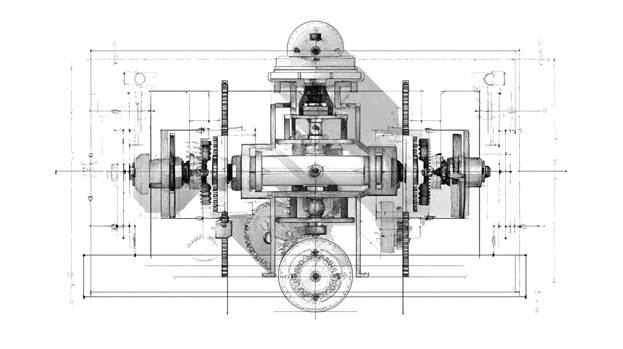
When you are viewing objects many miles away, the pan-tilt mechanism needs to be very precise. There are separate pan and tilt motors that control where the camera is looking. The positioning mechanism may need a resolution better than 0.003 degrees. If you need to track a fast-moving object, the pan-tilt mechanism must move quickly. The challenge is to move a camera that has a heavy lens quickly and precisely. More precisely, faster pan-tilt speeds increase the system’s cost.
The camera can pan continuously in a full 360°. The tilt can be 90°- 20°. The tilt can vary depending on the PTZ camera.
Lenses With Motorized Zoom Capability
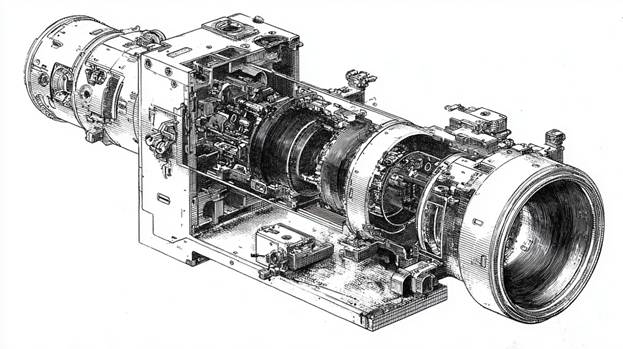
Motorized Optical zoom lenses: The optical lenses have long telephoto capability. The lenses are defined by their widest to narrowest angles (or telephoto). For example, a camera with a focal length of 6.1 mm to 262 mm has a zoom ratio of 43X. The zoom ratio can vary from 10X to over 40X. The lenses are designed to gather as much light as possible to ensure good low-light sensitivity. The lenses are also automatically focused as they zoom in or out.
Optical Camera Sensor and Video Processing
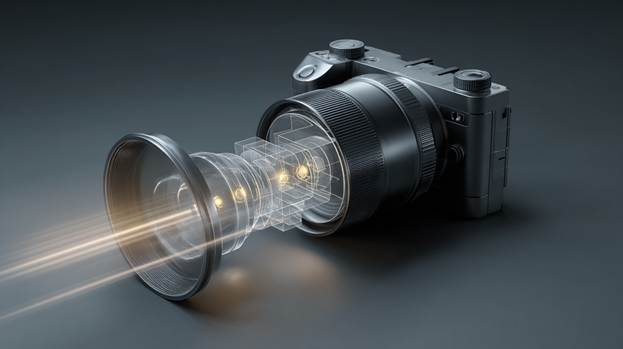
The imaging device converts light into digital video. They usually are CMOS sensors (often 1/2.8″, 1/1.8″, or larger). The camera electronics include Image Signal Processor (ISP), Wide Dynamic Range (WDR) processing, and low-noise Low-light (low-Lux) enhancement circuitry. This processor can also reduce digital noise and provide image stabilization. Stabilization can be achieved electronically or by using gyro sensors.
Optical sensors are available in resolutions ranging from 2 MP to over 8 MP.
Special IR Illumination
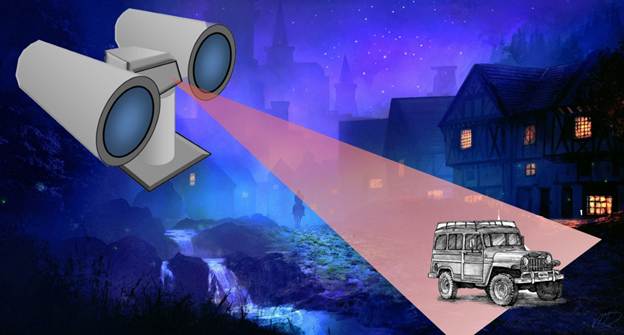
You can add very long-range IR illumination by using a special LED. The high-performance illumination systems include active focusing that provides even illumination that adjusts to the zoom lens magnification. The longest illumination systems have a maximum range of 500 m.
Computer Controls
The special computer in the PTZ camera provides several control functions, such as motor drive control, video compression (H.265), network protocols, and intelligence that detects motion, classifies objects, and makes other motion decisions.
Power control
The latest PTZ cameras get their power from the network. They require the highest level of power to support the camera electronics, the motors, and the heater and fan that maintain the camera environment.
Housing

The housing protects the PTZ camera from the environment. Many PTZ cameras are designed to be mounted on a wall or pole, but others are designed to sit on a roof or even on top of the pole. The physical orientation of components is important for determining how the PTZ camera can be used and in which environments it can operate. Some PTZ cameras are made from specialized materials (such as stainless steel) that are suitable for use in harsh environments, such as salt spray from the ocean.
Summary of PTZ Cameras
PTZ cameras have special lenses and motors that make them ideal for covering wide areas. The camera is designed to move horizontally and vertically, and to zoom optically, to capture details across wide areas. Unlike fixed cameras, PTZ units serve as dynamic observation tools.
If you want help selecting the best PTZ Camera, please call us at 1-800-431-1658 in the USA or 914-944-3425 worldwide or use our contact form.