
The Growth of AI Is Creating a Community Noise Problem
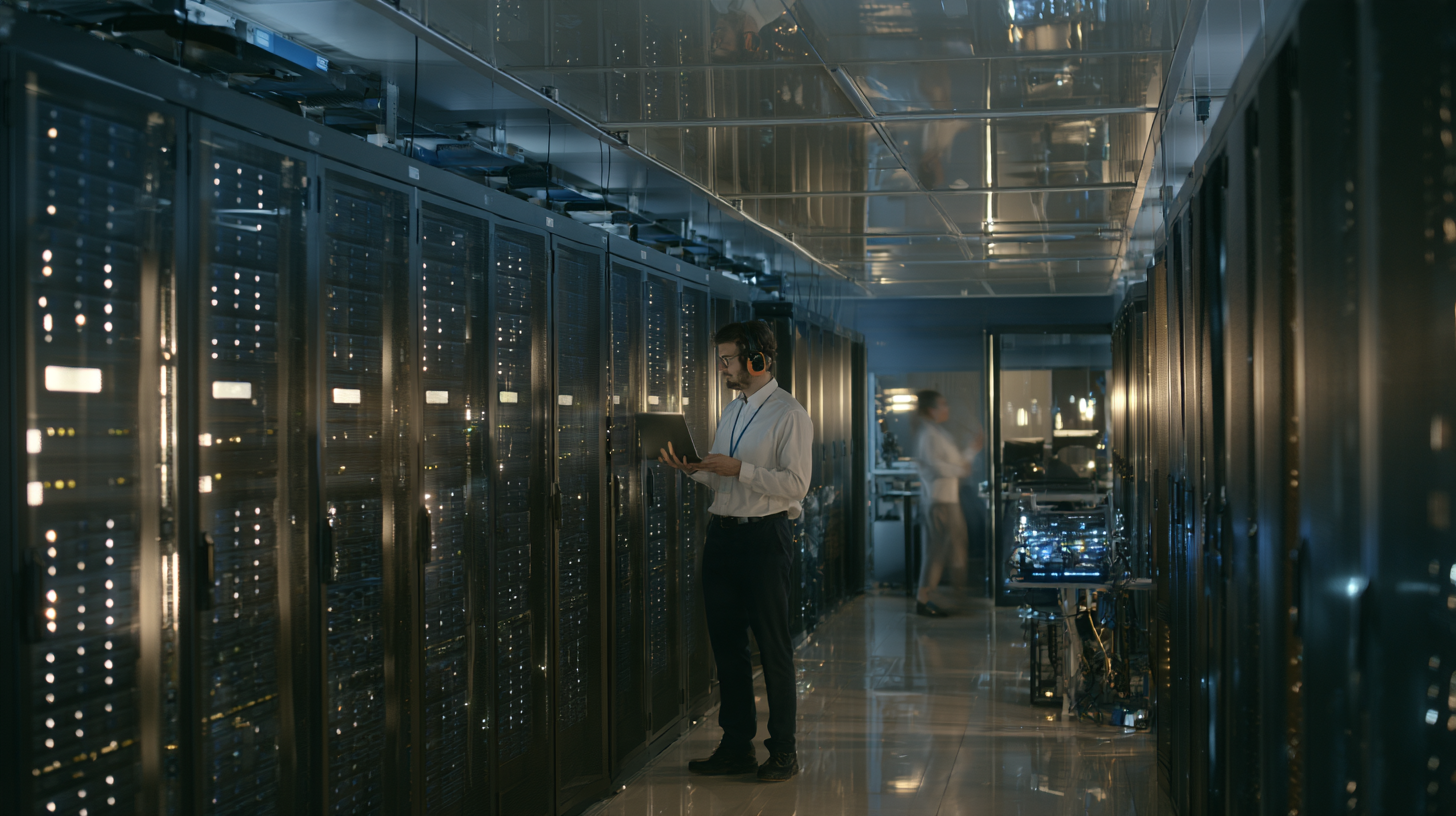
AI is driving the construction and expansion of large server farms and data centers. These facilities require enormous computing capacity, and thousands of high-performance servers operating continuously generate tremendous amounts of heat.
Removing that heat requires extensive cooling infrastructure. While the servers are generally located inside the building, much of the supporting mechanical equipment may be located on rooftops or around the exterior of the facility.
Cooling fans, chillers, cooling towers, air-handling equipment, pumps, transformers, and emergency generators can create significant amounts of sound.
And unlike many industrial noises, server-farm noise doesn’t necessarily stop at the end of the workday. A data center operates 24 hours a day, seven days a week.
When Server-Farm Noise Reaches the Community
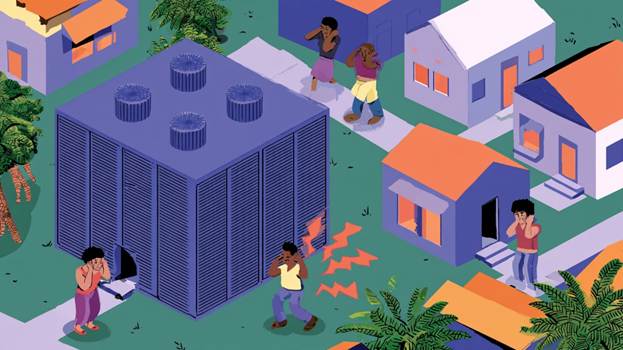
The sound produced by a data center may extend beyond the facility’s property.
Nearby residents may hear a continuous hum, fan noise, vibration, or low-frequency sound. These sounds can become particularly noticeable at night, when traffic and other background noise decrease.
Homes, schools, parks, businesses, and other neighboring properties can therefore be affected even when all of the data-center equipment is operating normally.
The problem can also become more significant as the server farm expands. Adding computing capacity frequently means adding servers, power infrastructure, and cooling capacity. The news has been filled with communities who are filing lawsuits challenging noise pollution.
A facility that met its acoustic objectives when originally constructed may face a different noise environment after future expansion.
For that reason, noise control should be considered part of the server-farm infrastructure, not something added only after neighbors begin complaining.
Server Farms Present a Unique Acoustic Challenge
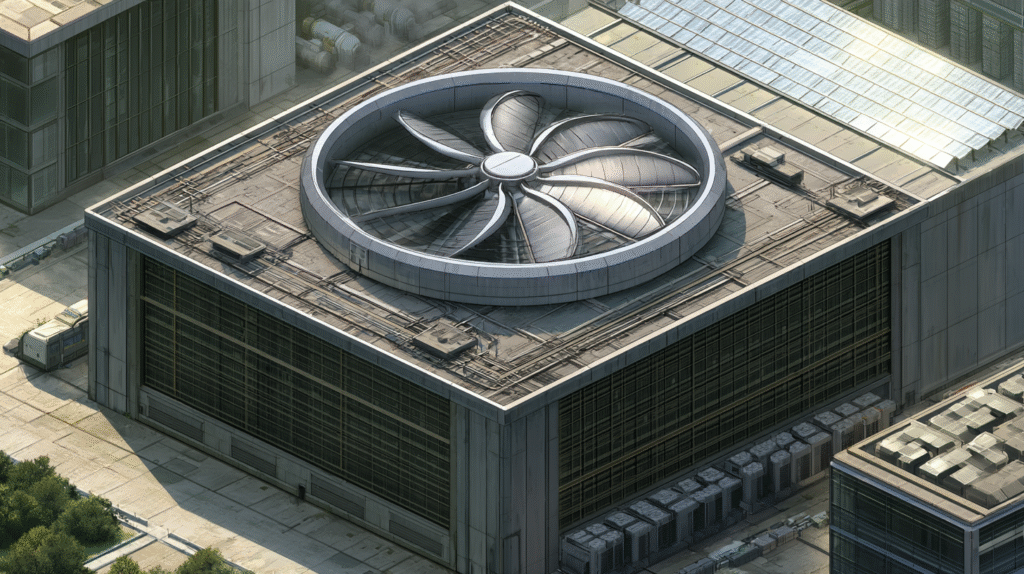
Controlling server-farm noise is more complicated than simply placing a wall around noisy equipment.
The equipment generating the noise is often essential to keeping the servers operating.
Cooling systems require enormous quantities of unrestricted airflow. Generators require ventilation and exhaust. Transformers, pumps, fans, and chillers must remain accessible for inspection and maintenance.
An acoustic solution therefore has to accomplish two objectives simultaneously:
Reduce unwanted sound while maintaining the airflow, cooling, reliability, and service access required by the data center.
That requires an engineered approach.
Noise-Control Solutions for AI Server Farms
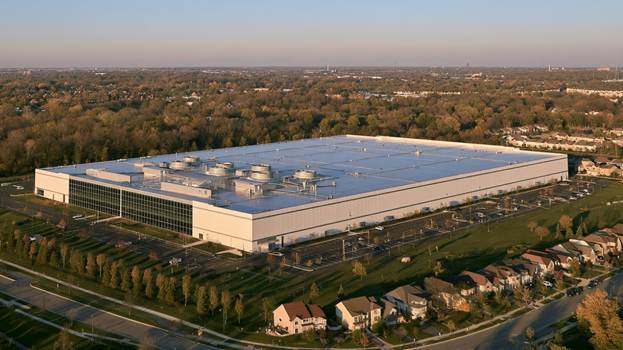
Every data center is different. Effective noise control may therefore require several technologies working together.
Reduce noise at the source. Selecting quieter fans, chillers, pumps, and other equipment can reduce the amount of sound that must ultimately be controlled. Variable-speed operation and proper equipment maintenance can also help reduce unnecessary noise.
Contain noisy equipment. Acoustic enclosures, lined housings, equipment screens, and generator enclosures can help contain sound while preserving the ventilation and maintenance access required by the equipment.
Control airflow noise. Acoustic louvers, intake and discharge silencers, duct treatments, and sound attenuators can reduce fan and airflow noise while maintaining the cooling capacity required by the servers.
Block sound from reaching neighboring properties. Engineered acoustic barriers, rooftop screens, berms, and strategic equipment placement can interrupt the direct path between mechanical equipment and the surrounding community.
Reduce vibration. Fans, pumps, compressors, chillers, and generators can transfer vibration through structural components. Vibration isolators, resilient connections, damping materials, and structural isolation can reduce this transmission.
Absorb reflected sound. Where appropriate, acoustic panels and sound-absorbing materials can reduce sound reflected from walls, equipment, and other hard surfaces.
Verify performance. After installation, acoustic measurements can determine whether the completed facility is achieving its design objectives. Continued monitoring can also identify changes as equipment is replaced or additional computing capacity is installed.
To learn more, see Outdoor Noise Control for Server Farms.
Noise Control Can Protect Community Relationships

Noise is more than an engineering issue.
A persistent sound that interferes with someone’s sleep or enjoyment of their property can quickly become a community-relations issue. Complaints can lead to additional testing, mitigation expenses, permitting concerns, project delays, and opposition to future expansion.
Addressing noise proactively demonstrates that the data-center operator recognizes that the facility is part of a larger community.
A properly designed acoustic system can help:
- Reduce noise reaching neighboring properties
- Support compliance with applicable community-noise requirements
- Reduce the potential for resident complaints
- Improve relationships with neighboring communities
- Support permitting and future expansion
- Protect workers inside the facility
- Improve communication and safety
- Provide greater flexibility as AI computing capacity increases
A Better Approach to AI Server-Farm Noise
The objective isn’t to eliminate every sound produced by a data center. That would be neither practical nor necessary.
The objective is to identify unwanted sound, determine where it is going, and reduce it before it becomes a problem.
That process begins with understanding the facility, its equipment, its surroundings, and its plans for future expansion.
As AI drives the development of larger and more powerful server farms, the environmental impact of those facilities will receive increasing attention. Electricity and water consumption are already important concerns. Noise should be considered another part of that environmental equation.
In conclusion
More computing power doesn’t have to mean more noise for the community.
With proper acoustic engineering, data centers can continue to expand their computing capacity while reducing their impact on the people who live and work nearby.
Please get in touch with us if you want help determining the best way to reduce unwanted noise in your organization. We can be reached at 914-944-3425, email dennis@kintronics.com, or use our contact form.