
Longterm Health of an Organization is More Than Profits

Every organization, whether a small business, large corporation, government agency, or nonprofit, must continually decide how to allocate its time, money, and resources. These decisions are guided by business priorities, the goals and objectives that enable the organization to fulfill its mission and achieve long-term success.
While increasing sales and profits is often viewed as the primary business objective, successful organizations understand that financial performance is only one measure of success. Long-term growth and sustainability depend on many interconnected factors, including employee productivity, effective leadership, strong management practices, physical and cybersecurity protection, and a positive organizational culture.
This article reviews how organizations that invest in these areas create a stronger foundation for growth, improve operational performance, reduce risk, and enhance their ability to serve customers. By focusing on both financial and organizational priorities, they are better positioned to achieve sustainable profitability and lasting success.
Financial Performance Remains Essential
Without adequate revenue and profitability, an organization cannot survive. Sales growth, cost management, and operational efficiency are often at the top of management’s priority list.
Top management continually evaluate questions such as: How can we increase revenue? How can we improve profitability? How can we reduce costs without sacrificing quality? And how can we improve customer satisfaction and retention?
Financial performance provides the resources necessary to invest in employees, technology, facilities, and future growth.
Benefits of Good Management
Organizations are ultimately collections of individuals working toward common goals. Improving employee performance can have a significant impact on productivity, quality, customer satisfaction, and profitability.
Successful organizations focus on:
- Training and education
- Clear performance expectations
- Employee recognition and rewards
- Career development opportunities
- Effective communication
When employees understand their responsibilities and have the tools they need to succeed, the entire organization benefits.
Employees are a Major Resource

One of the most overlooked sources of innovation in any organization is its employees. The people closest to the work often have the best understanding of what is working, what is not, and what could be improved.
In an open and well-managed organization, employees are encouraged to share ideas, identify problems, and suggest solutions. When management listens and acts on those suggestions, the results can be dramatic. Small improvements in processes, customer service, product quality, safety, or efficiency can add up to significant gains in productivity and profitability.
Physical Security Protects People and Assets
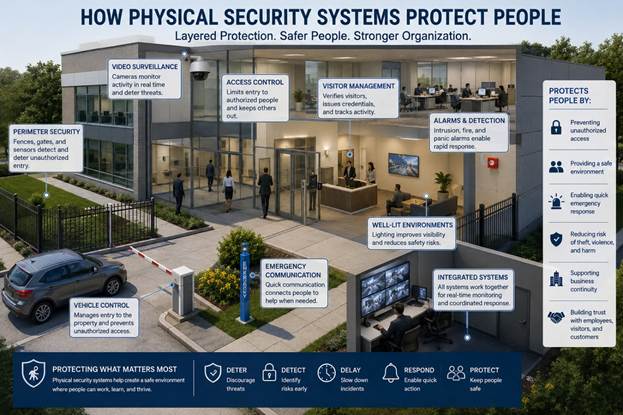
Security is often viewed as an operational expense, but it is actually an important business priority.
Organizations invest significant resources in facilities, equipment, inventory, information, and people. Protecting these assets is essential to maintaining business continuity and reducing risk.
A comprehensive physical security program may include:
- Access control systems: It should be used whenever there is a need to protect people, resources, data records, or computer facilities from unauthorized access. It ensures that only authorized individuals or processes can access specific resources based on predefined policies.
- IP Camera surveillance systems: are essential for increasing security in schools, businesses, healthcare facilities, industrial environments, military installations, and government organizations.
- Visitor management systems: improve security by providing a systematic approach to visitor registration and tracking. It helps identify and monitor individuals entering the premises, enhancing overall safety.
- Paging and Intercoms provide emergency communications that provide clear sound over a diverse array of devices. Various speakers and devices, such as intercoms, IP VoIP phones, and IP speakers can deliver the message to the organization.
- Cybersecurity has become one of the most important priorities for modern organizations. As businesses become increasingly dependent on computers, cloud services, mobile devices, and Internet-connected systems, they also become more vulnerable to cyberattacks.
Security of physical assets, people, and computer systems help create a safer environment for employees, customers, students, patients, and visitors.
Balancing Short-Term and Long-Term Goals
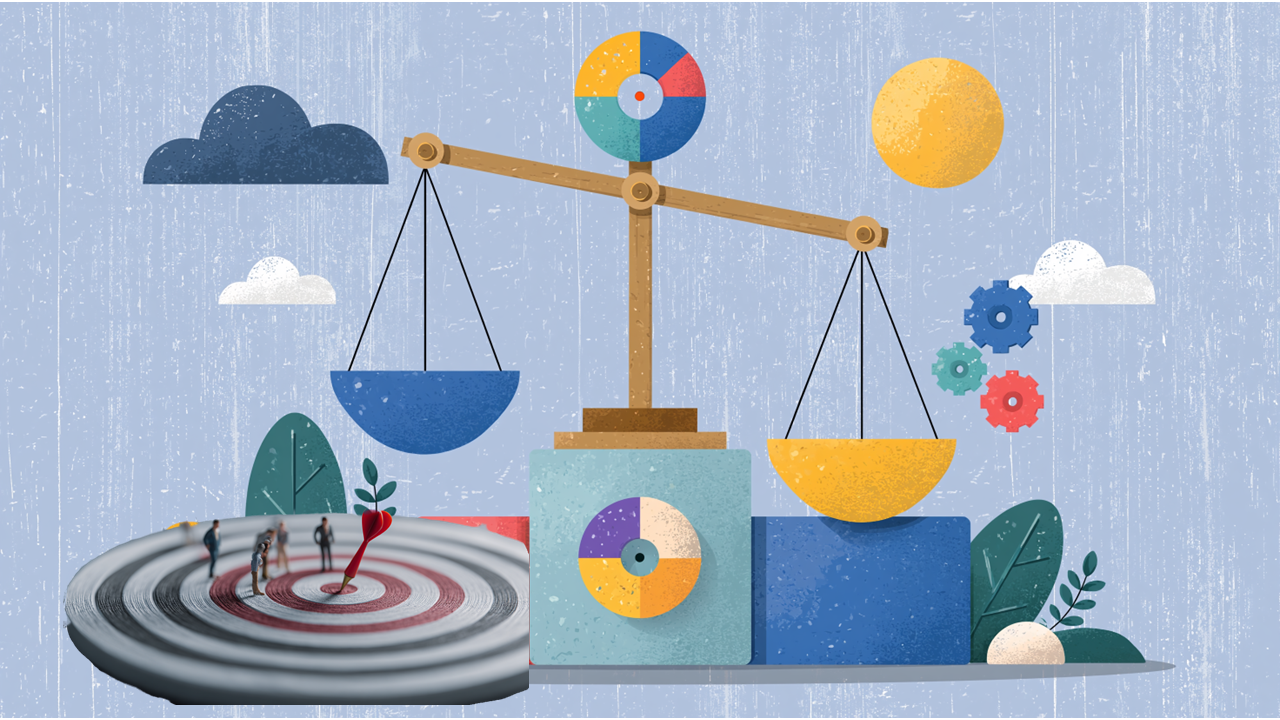
One of the challenges facing management is balancing immediate needs with long-term objectives.
For example:
- Reducing training expenses may improve short-term profits but hurt employee performance in the future.
- Delaying security upgrades may save money today but increase risk tomorrow.
- Focusing solely on quarterly sales may neglect customer relationships that drive future growth.
Successful organizations evaluate decisions based on both short-term impact and long-term value.
Making Better Business Decisions
Effective decision-making requires leaders to consider multiple factors rather than focusing on a single objective.
Questions that should be asked include: Will this improve customer satisfaction? Will this increase employee productivity? Will this reduce risk? Will this strengthen the organization’s competitive position? Will this support long-term growth? And will this improve profitability?
The best decisions are those that create benefits across multiple areas of the organization.
Aligning Priorities Across the Organization

Business priorities are most effective when they are clearly communicated and understood throughout the organization.
Good communication helps employees understand:
- The organization’s goals
- Their role in achieving those goals
- How success will be measured
- Why specific initiatives are important
When everyone is aligned around common objectives, decision-making becomes easier and organizational performance improves.
Conclusion
While increasing sales and profits remains a primary objective, successful organizations understand that sustainable growth depends on much more than financial performance alone. Maximizing employee productivity, developing strong leadership, protecting people and assets, maintaining cybersecurity, and making sound strategic decisions all contribute to long-term organizational success.
Organizations that focus on these broader priorities are better equipped to serve their customers, support their employees, manage risk, and adapt to changing market conditions.
When these priorities are aligned, the result is a stronger, more resilient organization that achieves lasting growth, improved profitability, and a sustainable competitive advantage.
If you need help determining the best security system for your organization, please get in touch with us at 914-944-3425, email dennis@kintronics.com, or use our contact form.