Define Your Objectives, Then Select the IP Camera Specifications Required
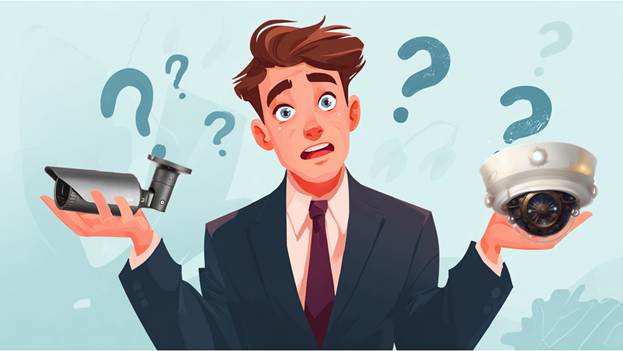
Your Objectives: Define the IP Camera specifications you need. Are you planning to purchase surveillance cameras for your business? Your objectives will determine the best camera for each location.
This article explains how specific objectives are fulfilled by specific specifications.
Set Your Objectives for Your IP Camera System
The first step is to determine your objective. Each IP Camera location could require a different objective. For example, identifying a person’s face requires different camera requirements than surveillance of a parking lot at night.
The second step is to review how each specification supports each objective. IP Camera Specifications include resolution, the lens angle, low-light capability, wide dynamic range (WDR), and intelligent or AI capability. Let’s consider the application that requires specific camera specifications.
You Want to Identify a Person’s Face
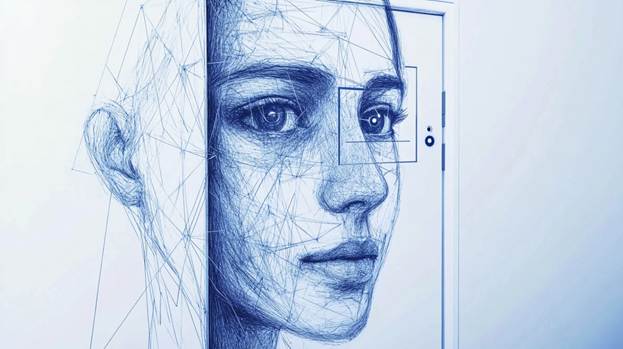
In this case, you need to provide sufficient resolution across the person’s face to identify them. The most important factors are the camera’s resolution and field of view, which determine the pixels across the person’s face.
The Resolution is Important
The IP camera’s resolution determines what you can see in a given field of view. So the camera’s resolution and the lens angle are two important specifications. To identify a person, we need to provide sufficient pixels across the face.
The resolution required is measured across the face
- Identification of a person that you know – 80 pixels/ft. across the face.
- Forensic identification of a person you don’t know – 160 pixels/ft.
- Best identification when there are poor conditions – 180 pixels/ft.
Camera Specification Suggested:
Select an IP camera with the highest resolution to capture the person’s face in a relatively wide field of view. For example, Hanwha’s P-Series surveillance cameras and the Axis Q17 series offer 4K resolution.
You Want to View a Large Area
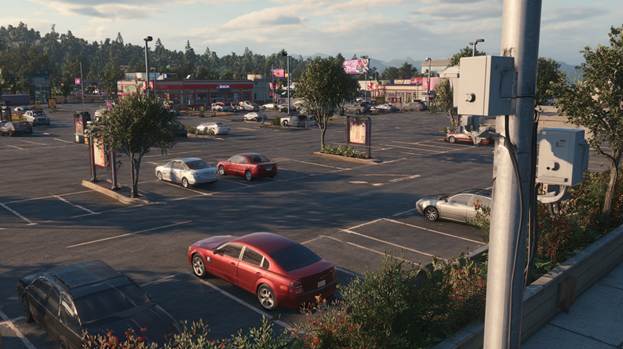
If you want to see everyone in a large room or vehicles in a parking lot, you will need a wide-angle lens to capture a wider field of view. Note that the wider view will allow you to see people, but doesn’t provide enough pixels per foot (or meter) to identify a person’s face or read a license plate.
The Lens Angle Specification is Important:
The lens angle defines the field of view at a certain distance from the camera. The narrow-angle lens provides magnification, while the wide-angle lens provides a wide field of view at a shorter distance.
Suggested Camera Specification to Consider
Select a camera that has a variable or remote zoom lens. Being able to adjust the lens will make it easier to meet your objective. For example, the X-Series cameras from Hanwha have variable zoom lenses that you can adjust from your computer.
If the camera is close to the area you want to see, you can also consider a panoramic or 180-degree camera.
To learn more about how to select the right lens, please read our article How to Select the Lens for Your IP Camera System.
You Would Like to See Something That’s Far Away
Do you need to view objects or people that are far from the camera? You may want to view a vehicle in a parking lot, a bird’s nest in a tree, or even a rocket launch.
The Camera Lens Requires a long Zoom
You need a camera with a very long zoom lens. There are special lenses that are usually part of a Pan, Tilt, Zoom (PTZ) camera. These cameras can read a license plate from a long distance; you’ll need a lens with higher magnification (and a narrower field of view).
The Zoom Lens Specification is Valuable
A pan, tilt, and zoom (PTZ) camera is best suited to this requirement. PTZ cameras come with a lens that can be remotely zoomed from about 6 mm to over 250 mm. They can read a license plate from over 700 ft (200m).
You Would Like to See a Person in a Dark Area
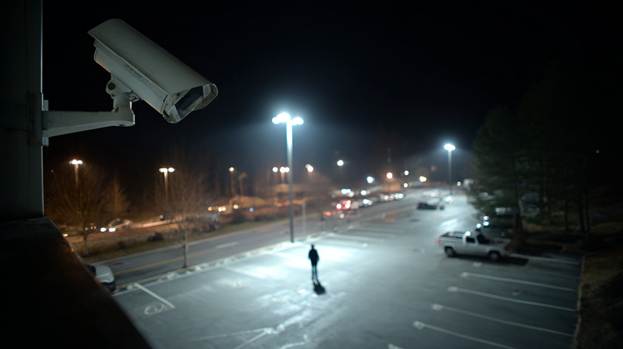
If you would like to keep a room dark and catch a criminal or see what’s happening in the parking lot at night, the low-light specification is important. It can also be useful in a dark walkway or doorway where the lighting isn’t good.
The Low-light Camera Specification is important:
You need an IP camera with good low-light performance. This allows you to see objects in color even in low light. They also include IR illumination, which allows you to see in total darkness in grayscale. Low-light specification is measured in Lux.
Extreme Low-Light Camera Specification is Required
We suggest a camera with very low-light capability that can capture scenes illuminated by a partial moon. For example, Hanwha and Axis have specialized cameras that can see in very low light. The Hanwha XtraLUX camera uses special lenses, has low-noise amplifiers, and large sensors that provide video with light levels as low as 0.004 Lux in color and 0.0004 Lux in grayscale (BW).
You Would Like to Be Notified if There is a Dangerous Event
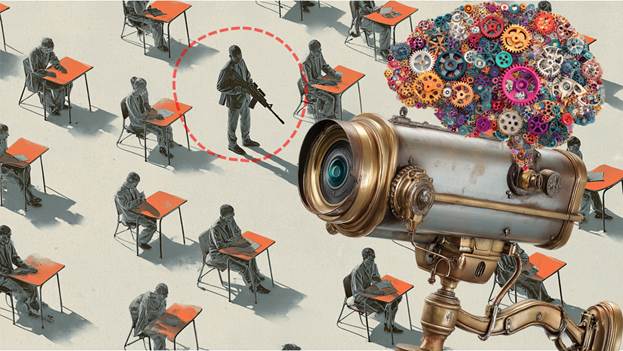
You would like an IP Camera System that automatically detects physical crises and provides alarms that prevent threats from becoming critical.
IP Camera System with Intelligence
Artificial Intelligence (AI) enhances IP Camera Systems to improve safety and security. AI-enhanced cameras are available with built-in capabilities, but a better solution is to use additional AI software that processes video and makes intelligent decisions. This technology offers a paradigm change in the usage of IP Camera Systems.
An IP Camera System with AI Capability is Required
The latest Scy-AI software can detect objects like guns in a person’s hand or a criminal in a crowd, intrusion into a perimeter, detect and count vehicles, enhance safety in parking areas, and recognize behavior anomalies. To learn more, see our discussion about AI-enhanced IP Camera Systems.
Final Note on Specifications and Objectives
It’s important to determine objectives before selecting your surveillance cameras. Each camera location could have a different set of objectives. The new IP cameras have improved specifications that provide better person identification, operate in low light, can zoom in on distant objects, and detect dangerous situations very quickly. These specifications will help you get the right camera for each location.
If you need help determining the best surveillance system for your organization, please get in touch with us at 914-944-3425, email dennis@kintronics.com, or use our contact form.