Installation Practices for Door Access Control Systems
There are several things to consider when selecting and installing a door access control system.
Access Control Practices
These safer practices increase the overall security of the system.
System security starts with the correct type of door-reader and secure wiring. It requires the right electric lock and an exit methodology for maglocks. It is also essential to select the right management software and additional security and safety features.
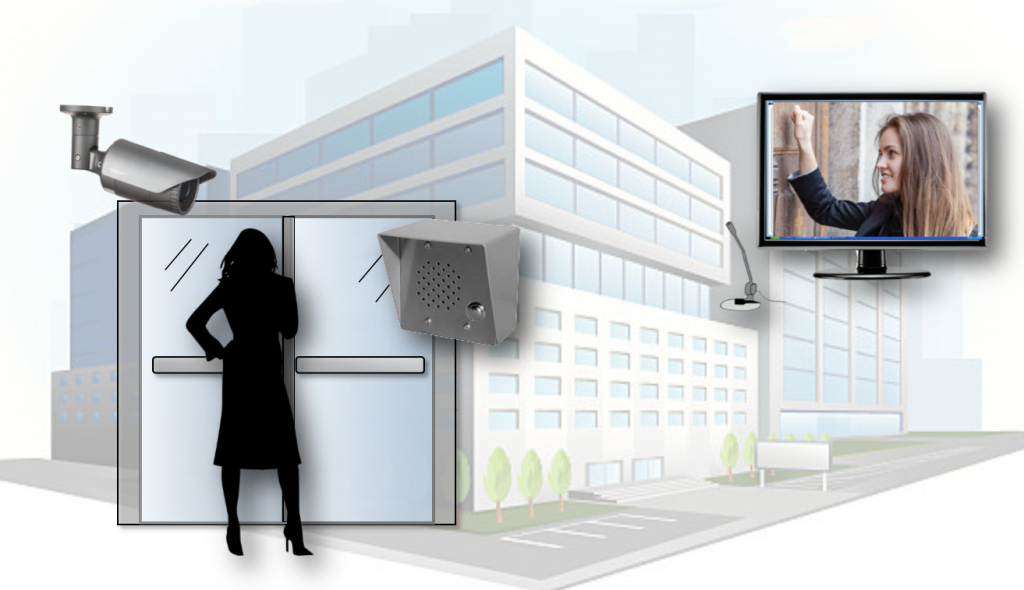
An access control system allows people with a credential to enter, but what happens when a visitor comes to the door? One easy way to handle the visitor is to add an IP intercom. An IP camera, and some additional software, can be added to provide a safe way to allow visitors to enter. This article describes how you can enhance your access control system.
Access Control, IP Cameras, and Intercoms Need Power Supplies
Designing a power supply is one of the first electrical engineering tasks I did in college. I remember those days. We learned many things, such as don’t drink a lot of beer before the lab class. Don’t put your finger in the electric socket. Always try to guess what’s on the test. And, stay away from courses about antennas because they were terrifying.
Power supplies are in computers, IP cameras, access control systems, IP paging, and intercoms. It is one of the most underrated components of a computer system. When you specify a computer, you think about the processor speed, the memory, storage, and display card. The power supply is never considered. Of course, if it fails, none of the other components will work. Sometimes it’s the most unsophisticated part of the system that is the most important. Does anyone remember the old joke about the argument between the various parts of the body*?
Power Supply Design
This article describes how a power supply works and some things you should consider when purchasing a power supply.
How to Integrate Temperature Scanning Biometrics with Access Control systems
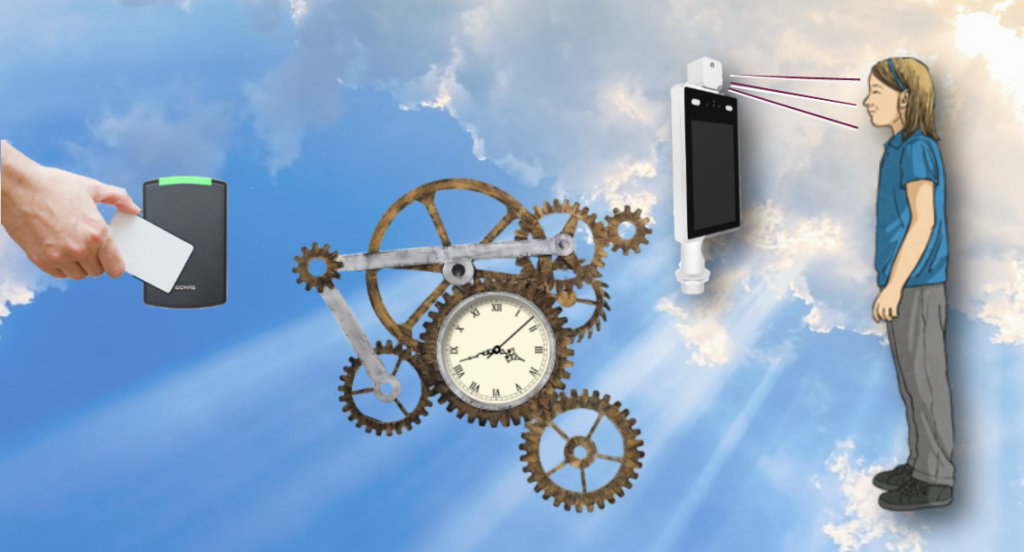
Access control systems can be enhanced to increase safety by adding biometric (face and Palm) access credentials, temperature scanning, and mask detection. The biometric temperature scanning panels can be used by themselves or added to existing access control systems.
Integrating Access Control and Temperature Scanning
Why add biometric access control? Mostly because it provides better security. A card credential can be stolen, forgotten, or even copied. Even though my mother told me that I could lose my head if it weren’t attached to my shoulders, I’m sure that I will have my head (and face) when I get to work. The face recognition or palm readers provide a very secure way to provide identification. One other thing about biometrics is that you don’t have to purchase cards or keyfobs for all the people in your organization. A typical card credential can cost over $3/credential, so if you have 500 people in the organization, it can save you money.
IP Cameras are getting very intelligent. Should we be worried?
There is a transformation taking place in IP Camera Systems. One that could change the way we think about surveillance.
The latest IP cameras are getting very smart. Smart enough to recognize different objects, such as people, vehicles, and animals. Intelligent enough to reduce false alarms, increase awareness and response time, and even deliver information for demographics (Business Intelligence) purposes.
The addition of Artificial Intelligence (AI) provides a much more effective and efficient IP camera system. This AI provides critical alarms and reduces the time it takes to review and find the vital video. This article reviews the new capability of IP surveillance cameras that include artificial intelligence.
IP Cameras with AI
I think that I shall never see
a computer made like me.
Our world has been turned upside down. What was true yesterday is no longer the same today. As Alice in Wonderland says, “How puzzling all these changes are! I’m never sure what I’m going to be, from one minute to another.” Can automated contact tracing and other unique technologies turn our world around?
The pandemic has created many challenges for schools. It has driven us to find new solutions. We hope that our scientists quickly find a vaccine and a cure for Covid-19. Our engineers have also worked hard to provide solutions that can help us until they do find a cure. This article describes the technologies that can be used to help us through the pandemic.
Contact tracing is an essential method for mitigating disease. It has been used for many years in fighting pandemics.
Pandemics have been around forever. They have caused many deaths, impacted the economies of nations, and have changed human history.
Today we are in the middle of the most recent pandemic, and it too has changed our lives. We struggle to maintain mitigation methods such as wearing masks, identifying people with the disease, and contact tracing to control the spread.
This article reviews how contact tracing and other mitigation efforts have been used to fight the pandemic. It examines the historical, social, political, and scientific aspects of mitigating illness.
Remember when you used
to be greeted by someone at the desk in the lobby. They would ask your name and
who you wanted to see. Then you would sign in and enter other information into
their logbook. Maybe you even got a visitor badge. Oh wait, many organizations still do this.
You may have also noticed that the world is changing. There are economic and health pressures that have motivated many organizations to use digital visitor management systems.
Today’s heightened interest in security and health has resulted in the need for better digital visitor authentication.
With the addition of access control panels and kiosks, you can even provide temperature monitoring and protective mask detection.
Visitor Management System
This article reviews how the latest visitor management system controls entry, provides a record of people entering the facility, and how the systems can integrate with other access control systems.
Unfortunately, this product is no longer available
Contact Tracing Concept
According to the CDC, contact tracing is key to slowing the spread of COVID-19. It helps keep you, your family, and your community safe. In general, contact tracing involves identifying people who have a contagious disease (cases) and people who they encountered (contacts) and working with them to interrupt disease spread. This includes asking people with COVID-19 to isolate and their contacts to quarantine at home voluntarily.
This article reviews the best ways to provide contact tracing.
The latest access control
systems are much easier to install than the older systems. Of course, it’s
only easy if you know exactly how to connect everything. The devil is in the
details, and this article provides the wiring diagrams you need to make your
access control system work.
As a review, the advantage of IP access control systems is
that everything is located at the door. The following diagram shows an example
of an IP access control system that uses a reader-controller.