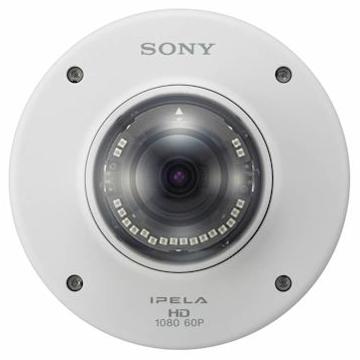
The SNO-6084R is part of the Samsung line of bullet IP camera systems. Good for mounting on a wall, a ceiling, or a level surface, these versatile cameras can be used to cover a wide variety of security needs.
Unlike PTZ camera models, a bullet camera has a fixed position that will neither pan nor tilt, unless the camera is adjusted by hand. However, this model allows for remote zooming and focusing. It works best when monitoring a fairly limited field of vision, like a hallway, a doorway, or a single room, or when used in tandem with additional bullet cameras.
Intelligent Surveillance Software
This IP camera system is built with intelligent video analysis that helps it to track specific events in its field of vision, including motion detection, audio detection, and face detection. When the system picks up sounds, movements, or recognized faces, it can be programmed to trigger events in response.
Video Quality
This camera system delivers a 2 megapixel image with a resolution of 1920 x 1080, recording at a frame rate of 30fps. Day and night detection allows it to determine a recording mode appropriate to the light level, switching from color images in daylight conditions to a black and white image at night, providing for a sharper image during low-light conditions. It also comes equipped with a series of IR LED’s, allowing you to get a clear picture in even complete darkness.
To combat the effects of sub-optimal recording conditions, this camera features both defog and vibration compensation to clear up a foggy image or stabilize a shaking video.
Extras and Peripherals
An SD/SDHC/SDXC memory card slot is built directly into the camera itself, allowing for local storage of video. The system also supports bi-directional audio.
Protective Features
The SNO-6084R is built with a dustproof and waterproof casing, making it safe for outdoor areas that may be exposed to rain and other harsh conditions. Tampering detection sends out an alert when the camera is compromised, like when the framing direction is changed, the lens is blocked, or the video image is suddenly and dramatically altered.