Caller: ‘Can you give me the telephone number for Jack?’ Operator: ‘I’m sorry, sir, I don’t understand who you are talking about.’
Caller: ‘On page 1, section 5, of the user guide it clearly states that I need to unplug the fax machine from the AC wall socket and telephone Jack before cleaning. Now, can you give me the number for Jack?’
Operator: ‘I think it means the telephone plug on the wall.’
Specifications Versus Real-World Low Light Camera Performance
This post was updated on 11/27/2017 to reflect new cameras available.
The low light capability of an IP camera will determine if you can use the camera outdoors at night or inside with minimum lighting. This article reviews the IP camera specification for minimum light level and the factors that affect the low light performance.
Low-light sensitivity for IP cameras is defined as the lowest level of light that still provides reasonable video clarity. Most cameras will work well in the daytime or at normal room lighting, but we have to take a careful look at the specifications to determine if the camera will work when it’s dark.
The low light sensitivity defined in the camera specifications can be misleading. IP camera specifications use lux (lx) to define minimum light level, but there’s more to the comparison than just the lux level.
As we have mentioned in the past, the best IP camera is related directly to the application. In our current comparison testing, we focused on the features that are most important such as low light performance, wide dynamic range, and resolution.
In this review, we compared the resolution of the Samsung SMV-6084R, Sony VM630, Hikvision DS-2CD7254FWD, and IPX DDK-1700D cameras. The test was carried out in good lighting and with similar lens angle settings. Note that actual resolution is also affected by the amount of light, dynamic range, and camera noise. All these factors must be considered in real-world applications. Please take a look at our article, Understanding IP Camera Resolution Specifications that discuss this in more detail.
If at first you don’t succeed skydiving is not for you.
Artificial intelligence is no match for natural stupidity.
Customer: “I received the software update you sent, but I am still getting the same error message.” Tech Support: “Did you install the update?” Customer: “No. Oh, am I supposed to install it to get it to work?”
Resolution is a critical metric for selecting the right IP camera for your surveillance system. After all, if we want to be able to read the license plate on a car in the parking lot, we need to have enough resolution. But how is resolution measured? Can we rely on the manufacturer’s specification and what other factors affect the image that you finally see?
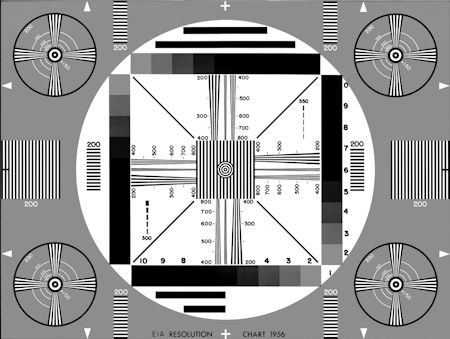
In the old days of B/W analog cameras, we used a test chart to determine the resolution of the camera. Today’s megapixel color IP cameras require more complex measurement techniques. This article will help you understand the resolution specification so you can select the best camera for your application.