A doctor held a stethoscope up to a man’s chest. The man asks, “Doc, how do I stand?” The doctor says, “That’s what puzzles me!”
Patient: “I have a ringing in my ears.” Doctor: “Don’t answer!”
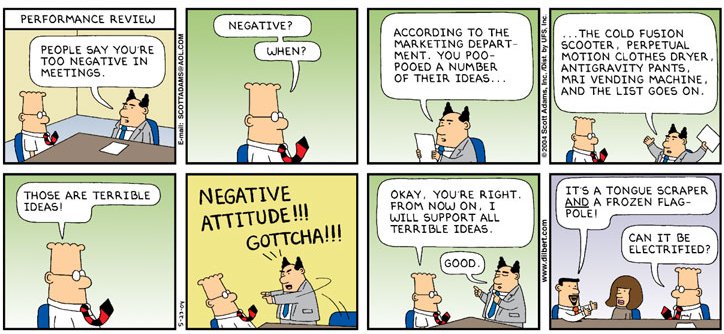

A doctor held a stethoscope up to a man’s chest. The man asks, “Doc, how do I stand?” The doctor says, “That’s what puzzles me!”
Patient: “I have a ringing in my ears.” Doctor: “Don’t answer!”
How do you select the right equipment for your IP camera system? The surveillance system is more than just the IP camera. It also includes the video recording system, lens, lighting, camera enclosures, network switches, and mounting brackets. Everything has to work together so you get the security system you expected.
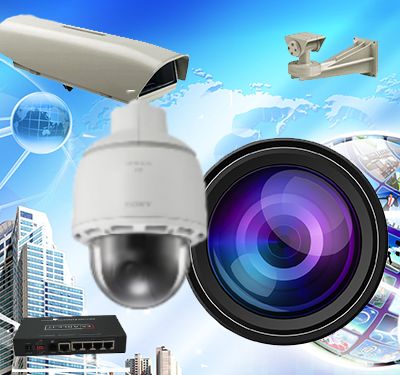
Selecting the right equipment for your security system can be quite complicated. Sometimes it’s like putting together a puzzle. We need to make sure we have the right camera, but does the camera work with all the other equipment?
We would like to be notified of alarm conditions, but does the video recording system provide alarm notification? We would like to mount the camera on a pole, but does the camera include image stabilization? As we decide on one thing, it can affect other parts of the system.
In this article, we provided a real-life surveillance example and then defined a complete surveillance system.
Continue reading “Selecting the Right Equipment for Your IP Camera Surveillance System”
How do the latest network-attached IP audio systems work? The latest digital IP systems use protocols that are similar to Voice over IP (VoIP) protocols. This communication method also uses Power over Ethernet (PoE) to power the telephones, IP paging systems, and IP intercoms.
These IP audio systems use the network cable rather than using individual wires that go from an amplifier to a speaker. What is the magic behind sending multiple paging announcements on the same wire at virtually the same time?
Arthur C. Clark said, “Any sufficiently advanced technology is indistinguishable from magic.”
Here’s how the magic works.
Continue reading “How Network Attached Amplifiers and IP Intercoms Work”I love the wisdom of Steven Wright. Here are some of his comments:
You may know the speed of light but, what’s the speed of dark?
Support bacteria – they’re the only culture some people have.
Many people quit looking for work when they find a job.

How far away can we see things using a long range PTZ camera? Obviously, we can see the moon which is 238,900 miles away, but of course we would need a powerful telescope to see the small craters. We can see people in a crowd, but when we want to identify their face, it gets a lot harder. The distance is determined by what detail we need to see.
Do you want to be able to detect a vehicle moving, or identify the person driving the vehicle? The objective will determine the type of IP camera system you will need. In general the distance is determined by the lens, the type of camera (thermal camera or optical camera), the camera resolution, and sometimes the IR illuminator available. This article describes how we can specify the IP camera system required for long distance viewing.
Computers are all around us. These sneaky little critters are not only on our desks, they are in our phones, cash registers, refrigerators, stoves. They are also in IP cameras, door access control readers, and network attached paging amplifiers. The world is certainly getting smarter, but have you ever thought about how these computers actually work? Probably not. And, you’re probably saying, ‘Why do I need to know any of this?
Bloomberg Business Week recently published a complete issue dedicated to “Coding”. Why go to the bother? Well the Business Week article says that learning about technology, is good, it’s important, and sometimes essential for helping you keep your job.
Here’s some basic information that could help you stay current. It will help take the magic out of the computer technology we use every day.
Continue reading “How the Computer Works in IP Cameras”A computer lets you make more mistakes faster than any invention in human history – with the possible exceptions of handguns and tequila.
This article was updated on 10/15/2019 to include new IP paging systems.
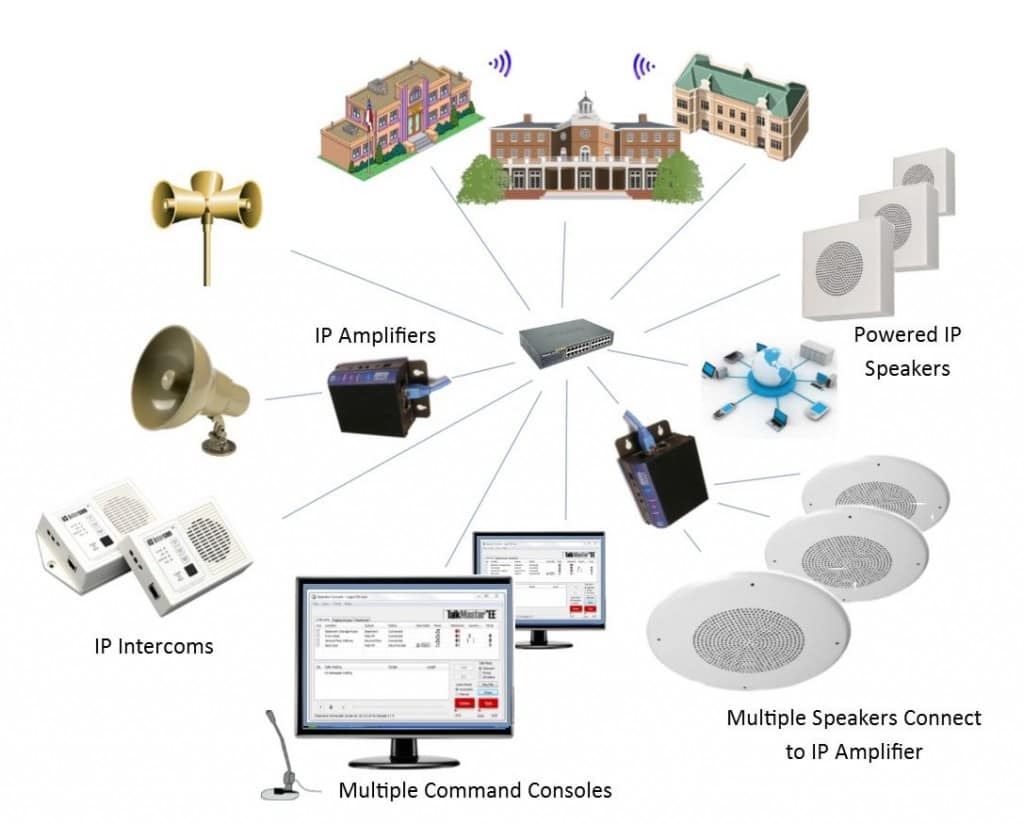
There’s more to security than door access control, intrusion alarms, and video surveillance. It is also important to tell people what to do in an emergency. Emergency public notification is one of the important applications for IP paging and intercoms. There are also many other new applications possible with the latest IP paging and intercom systems.
Remember the old days of 500-watt amplifiers with hundreds of speakers attached. It was almost impossible to provide multiple buildings, public address systems. The great thing about network-attached paging systems is that everywhere you have a network, you can install a small network-attached amplifier.
Continue reading “How Network Attached Paging and Intercoms Increase Security”
If you’re serious about your security, you need a full featured video management system. This is one of the most important parts of your IP camera system. But, what is the right IP video recording and management system for you?
In general the IP camera recording system provides the recorded video history, can notify you of alarm conditions, provides some analytic functions, and helps you control your cameras. It may also provide enhanced analytic capability such as detecting when someone leaves a package, or when someone takes a computer off the table. Here are some thing to consider:

Back in 1927 audiences were amazed by the latest motion picture technology. The “Jazz Singer” was the first full-length motion picture to incorporate synchronized dialogue. The new “talkies” had come of age. Today we are seeing the introduction of audio into our video security systems. The confluence of IP cameras, IP intercoms, and IP paging systems are enabling more versatile security and control systems.
IP camera systems have been around since 1996. They changed the way CCTV surveillance cameras transported and recorded the video. IP cameras have included two-way audio for many years, but this capability was not used effectively. Adding audio was not as easy as it appeared. There were many problems to be solved, including audio feedback, background noise, and microphone sensitivity. The addition of special audio filters and feedback control made this technology more viable. Today we see new opportunities created by adding intercoms to IP camera systems. Intercoms can also be integrated with IP door access control readers, providing a complete door control system.