We are often asked, what is the best IP camera for my security or surveillance system? Over the last year, we tested a number of different IP cameras. We compared their published specifications and more importantly how they actually performed in our tests. We found that sometimes the less expensive camera can be a much better value.
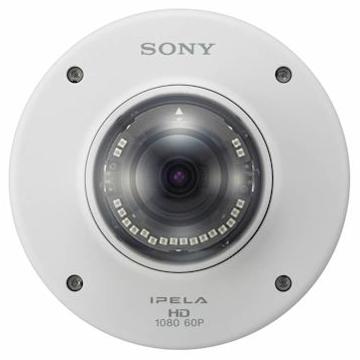
In the following head to head test, we compared the Sony SNC-VM601 to the Axis P3384V. Both of these dome IP cameras have similar specifications and provide the latest wide dynamic range (WDR) capability. The test determined which camera provided the best value and performance.
We compared camera resolution, low light sensitivity, wide dynamic range, and actual usage in a specific application. Of course, these are not the only characteristics to consider, but we have found these to be the most important in many applications. Here are the results:
Many IP cameras include motion detection capability. It is also available using video management software (VMS) or a network video recorder (NVR). This is a very important analytic function because it controls when an alarm is triggered and when the video is recorded.
Motion detection seems to be a simple concept. All we do is compare one frame to another and look for things that change. For example, a moving white ball can trigger an alarm by comparing two frames.
Well, it isn’t that simple. The early engineers who worked on motion detection discovered that this was a difficult engineering problem. Back in the 1970’s, I worked on a project to detect moving particles in fluids. What I discovered was that it is sometimes difficult to discern the difference between a moving object and signal noise.
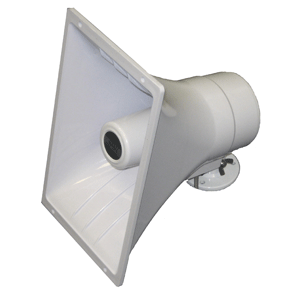
Whether it’s an emergency announcement or page in a school, how do you determine the speaker and amplifier required for a specific location? IP paging systems can provide exactly the right sound level to exactly the right location, but what is the right sound level?
How loud does the emergency paging system need to be? How much sound is needed to hear an announcement in a classroom or in a sports field where there is a lot of background noise?
This article provides the technical background and practical information needed to help you determine the right power and speakers required.
One of the draws of the luxury apartment buildings on New York’s Park and Fifth Avenues has been the access control provided by uniformed doormen; trusted employees who know every resident by sight and can be counted on to screen all visitors and grant them access only after announcing them and gaining permission over the apartment’s intercom.
The cost for such security: co-op and condo prices that reach into the two-digit millions. But there’s an alternative for those of us who cannot afford to live in such luxury – a digital doorman.
IP surveillance cameras are ubiquitous today. Everyone who sets foot out his door is well aware that somewhere, sometime on his journey he will enter into and out of several cameras’ fields of view.
Since very few everyday security cameras are covert, one has only to look several feet up at buildings, light poles, retail store ceilings to see this is true. There is a reason for this – the sight of a surveillance camera can be beneficial in deterring crime.
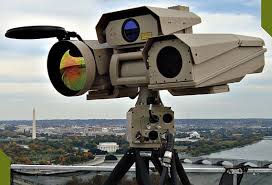
But there are also cameras capable of surveying an area, sight unseen, from, literally, miles away. These surveillance cameras fall under the heading, long-range cameras.
A physical security system is a collection of equipment and software that provides security and safety. It can use a variety of network-attached devices as well as a number of software products that can be integrated to provide a unified solution.
Safety and Security banner
To be more specific, the integration of the latest video management software (VMS), with door access control software, and emergency paging software along with IP cameras, IP sensors, IP door readers, and IP paging amplifiers can provide a very complete physical security system. These IP based security systems provide similar capability to Physical Security Information Management (PSIM) software at much less cost.
Why should I use an IP camera when the analog cameras are so much cheaper?
That’s a question we get especially from those people who have been using analog CCTV (closed-circuit TV) systems for many years. Actually CCTV has been around for over 45 years. Olean, NY was the first municipality in the US to use cameras on its main street to help reduce crime (according to Wikipedia this was back in 1968).
Not only have the analog CCTV systems been around for a very long time, but they also haven’t really changed from their original capability. Well yes, they have gotten much cheaper, and there are efforts to use higher resolution cameras, but their capability hasn’t changed. The first systems were based on the TV standards established by the National Television System Committee (NTSC). The standard indicated that there should be 525 vertical TV lines, with a frame rate of 30 frames per second. Take a look at our video, How the Video Camera Works.
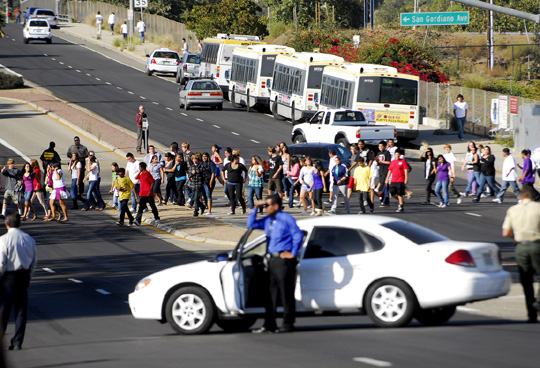
Emergency paging increases safety because it provides immediate notification of dangerous situations. By adding panic buttons, you can make these emergency pages very quickly.
Push the button and the paging system will let everyone know that the school is in lockdown, or that they should exit the building. These prerecorded announcements can cover many emergency situations.
Of course, you don’t have to use just the panic buttons, a person can still make a manual announcement. Since IP Paging systems connect to your network, they can handle many different emergency situations. They also can be used not only in one building, but in multiple buildings, or even on multiple campuses.
Here’s how to add an emergency IP paging system that includes panic buttons to your organization.
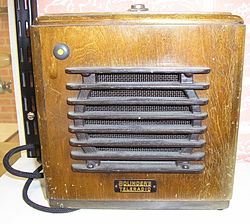
The intercom has been with us for a long time, although we rarely acknowledge its presence. That’s because an intercom on its best behavior prefers to avoid the limelight and let the voice take all the attention.
Like any staple of technology, the Intercommunication Device has seen its share of change over the years.
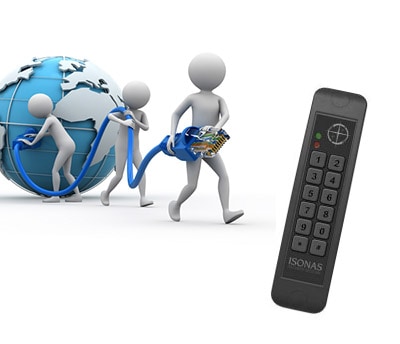
Remember when door readers were connected to the central control panel and how difficult it was to run all the connections?
Oh wait, people are still doing that. The new IP connected readers have been available for a number of years and it’s surprising that they haven’t made more of an impact in the market. I talked to a number of people about this and the conclusion is that security dealers like to do what they know and find it difficult to work with computers and networks.
Are the IP door readers actually better, or as some people say, too expensive?
In this article, we reviewed the cost of the two technologies for an 8 door system.