Recently there was an article in the IEEE technical journal that declared, “Video Telephony has Finally Arrived”. They described how the Jetsons first predicted this in 1962, and now we can use our computer and Smartphone to do exactly what George did with his boss Cosmo Spacely. This animated sitcom described the world in 2062. I guess we did this sooner than expected.
Today we can use Skype and similar services to see and talk to each other across the world. The videophone has become a reality, but what about viewing our IP surveillance cameras remotely on our mobile devices? More specifically how feasible is it to use a Cloud system to view and record video from an IP camera system? Does new technology allow us to replace a local video recording system? Well almost.
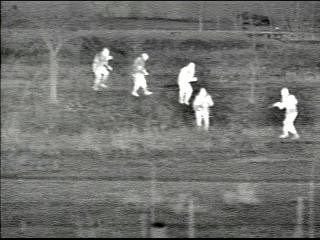
Very low light optical cameras, IR illumination, and thermal cameras are options for seeing in the dark.
It was a dark night with just a small sliver of the moon shining through the trees. The mouse nosed its way through the underbrush using its nose to find small nuts and berries. Unknown to the mouse there was something watching from a tree limb high above. The owl was able to see the mouse clearly even though there was hardly any light. Poor mouse. He had no idea he was in trouble.
How does the owl see in the dark? This article describes the various ways that animals, and more importantly, video cameras can see in the dark. We discuss how cameras make use of the limited light available, IP cameras that use IR illumination and thermal cameras that use thermal imaging technologies.
The other day I was walking down a street in Manhattan and I saw a guy selling watches. There was one watch that looked just like an expensive Rolex but it cost only $50. What a deal, I thought.
I think everyone tries to find the best deal. Unfortunately, we sometimes forget that old maxim, “you get what you pay for”. I know I do. How many times have we gotten burned by this?
I’m not sure how to tell if the watch is worth $50, but I can provide some guidance about what to consider when purchasing an IP camera.
IP Cameras range in price from under $50 to well over $1000. What is the difference? As you may guess it’s the functionality and quality. The low-cost cameras are usually sold to the home consumer market and are not designed for commercial security and surveillance applications. The more expensive camera lasts longer and allows you to see things clearer. So how does this relate to getting the best IP camera for your money?
One of the most important components in a paging system is the speakers. So before we define any paging system, we start by determining the amount of sound required at each location.
Once we know the type of sound required, we can select the right speaker. After we have defined the speakers, we can determine the right amplifier to use.
What’s the best speaker for you? Well it depends on a number of things.
For example, do you want to hear music or just voice paging? The type of speaker also depends on how large an area you want to cover with sound. The background noise and where you want to place the speaker is also important. It may be necessary to select a different speaker for each location. This article reviews how to select the right speaker for the job. We will review the sound output which is measured in decibels (dB), the sound quality (or frequency range), and the power required at the speaker.
The latest IP cameras have much better video quality than the early analog CCTV cameras. Even though they both capture video, IP cameras do it dramatically better. The reason; they contain high performance digital processing computers. The computers provide reduced noise, improved wide dynamic range, reduced smearing, and enhanced low light performance.
This article reviews how these processors work and why they are important to the total IP camera system performance.
Do you want to be able to read a license plate over a mile away? You can do it with the latest very long range PTZ IP camera systems. There are long range camera systems that are best for daytime operation and others that can be used day or night.
Be careful about low priced systems that claim long range capability. They don’t have the high quality zoom lenses or laser illuminators that are used in professional camera systems.
In our previous article How Far Can We See with the PTZ IP Camera, we reviewed the difference between detecting a person or vehicle, recognizing the type of object, or identifying who the person is. Each criteria requires a different amount of resolution on the target.
This article reviews the components that make up a long range camera system, and shows how total system performance determines the price.
IP Door Access Control Systems are easy to install and provide excellent flexibility, yet many people who are used to the older type systems have concerns about using them. This article tries to take the mystery out of network attached door access control systems, and describes how very easy they are to install and use.
You will find that all the signals that were on multiple wires, are now encoded on the single Ethernet network cable. They are just as secure as the older technology. Here’s how they work and how to install them.
(This article was updated to reflect new IP cameras, 10/16/2017)
When selecting cameras for your IP camera system, one of the most challenging situations is when you have very little light. When it’s dark, there can be motion smearing and amplifier noise that degrades the image.
All IP cameras handle low light by opening the lens iris, increasing amplifier gain, increasing shutter time, and switching to day/night mode. But, what is the best IP camera for low light operation, and what are the correct settings? This article provides guidelines for selecting the right camera and adjusting the image settings.
How do you select the right equipment for your IP camera system? The surveillance system is more than just the IP camera. It also includes the video recording system, lens, lighting, camera enclosures, network switches, and mounting brackets. Everything has to work together so you get the security system you expected.
Selecting the right equipment for your security system can be quite complicated. Sometimes it’s like putting together a puzzle. We need to make sure we have the right camera, but does the camera work with all the other equipment?
We would like to be notified of alarm conditions, but does the video recording system provide alarm notification? We would like to mount the camera on a pole, but does the camera include image stabilization? As we decide on one thing, it can affect other parts of the system.
In this article, we provided a real-life surveillance example and then defined a complete surveillance system.
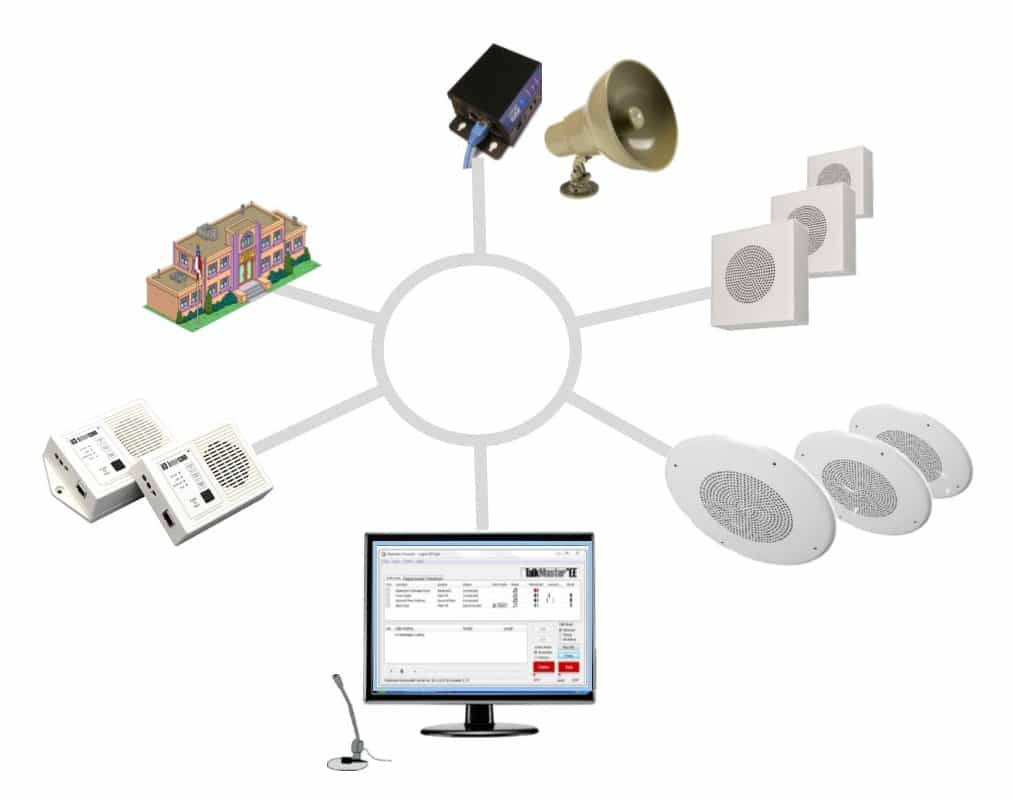
How do the latest network-attached IP audio systems work? The latest digital IP systems use protocols that are similar to Voice over IP (VoIP) protocols. This communication method also uses Power over Ethernet (PoE) to power the telephones, IP paging systems, and IP intercoms.
These IP audio systems use the network cable rather than using individual wires that go from an amplifier to a speaker. What is the magic behind sending multiple paging announcements on the same wire at virtually the same time?
Arthur C. Clark said, “Any sufficiently advanced technology is indistinguishable from magic.”