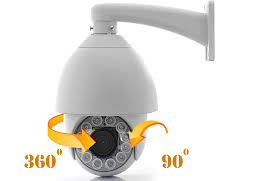
How far away can we see things using a long range PTZ camera? Obviously, we can see the moon which is 238,900 miles away, but of course we would need a powerful telescope to see the small craters. We can see people in a crowd, but when we want to identify their face, it gets a lot harder. The distance is determined by what detail we need to see.
Do you want to be able to detect a vehicle moving, or identify the person driving the vehicle? The objective will determine the type of IP camera system you will need. In general the distance is determined by the lens, the type of camera (thermal camera or optical camera), the camera resolution, and sometimes the IR illuminator available. This article describes how we can specify the IP camera system required for long distance viewing.
Computers are all around us. These sneaky little critters are not only on our desks, they are in our phones, cash registers, refrigerators, stoves. They are also in IP cameras, door access control readers, and network attached paging amplifiers. The world is certainly getting smarter, but have you ever thought about how these computers actually work? Probably not. And, you’re probably saying, ‘Why do I need to know any of this?
Bloomberg Business Week recently published a complete issue dedicated to “Coding”. Why go to the bother? Well the Business Week article says that learning about technology, is good, it’s important, and sometimes essential for helping you keep your job.
Here’s some basic information that could help you stay current. It will help take the magic out of the computer technology we use every day.
This article was updated on 10/15/2019 to include new IP paging systems.
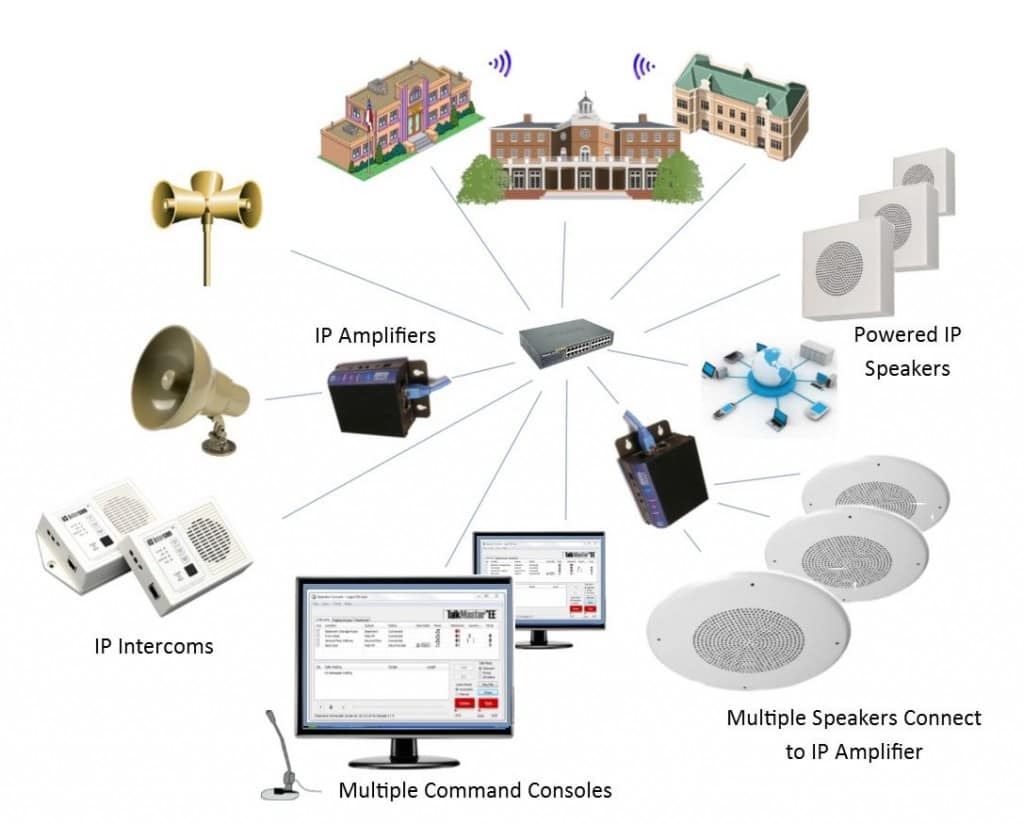
There’s more to security than door access control, intrusion alarms, and video surveillance. It is also important to tell people what to do in an emergency. Emergency public notification is one of the important applications for IP paging and intercoms. There are also many other new applications possible with the latest IP paging and intercom systems.
Remember the old days of 500-watt amplifiers with hundreds of speakers attached. It was almost impossible to provide multiple buildings, public address systems. The great thing about network-attached paging systems is that everywhere you have a network, you can install a small network-attached amplifier.
If you’re serious about your security, you need a full featured video management system. This is one of the most important parts of your IP camera system. But, what is the right IP video recording and management system for you?
In general the IP camera recording system provides the recorded video history, can notify you of alarm conditions, provides some analytic functions, and helps you control your cameras. It may also provide enhanced analytic capability such as detecting when someone leaves a package, or when someone takes a computer off the table. Here are some thing to consider:
Back in 1927 audiences were amazed by the latest motion picture technology. The “Jazz Singer” was the first full-length motion picture to incorporate synchronized dialogue. The new “talkies” had come of age. Today we are seeing the introduction of audio into our video security systems. The confluence of IP cameras, IP intercoms, and IP paging systems are enabling more versatile security and control systems.
IP camera systems have been around since 1996. They changed the way CCTV surveillance cameras transported and recorded the video. IP cameras have included two-way audio for many years, but this capability was not used effectively. Adding audio was not as easy as it appeared. There were many problems to be solved, including audio feedback, background noise, and microphone sensitivity. The addition of special audio filters and feedback control made this technology more viable. Today we see new opportunities created by adding intercoms to IP camera systems. Intercoms can also be integrated with IP door access control readers, providing a complete door control system.
We are often asked about how much bandwidth is required by an IP camera system. It is a valid question, and one we are constantly reviewing.
Megapixel IP cameras generate quite a lot of data. The latest 4K cameras will generate even more; requiring more video storage, and more network resources.
It is important to understand what contributes to the bandwidth, and what steps can be taken to control it. This article describes the various compression schemes, the factors that affect bandwidth, and the practical things you can do to reduce the bandwidth in your IP camera systems.
This article was updated on 4/12/2018 to reflect new IP cameras
IP Camera manufacturers provide product specification sheets that help you select the right camera for your IP security and surveillance system. But, which specifications are important? They include such things as resolution, minimum light sensitivity, lens, WDR, signal to noise, etc. This article reviews the important camera specs, and how to avoid being fooled by specsmanship (from the marketing department).
The importance of each of the camera specifications depends on your objective and application for your IP camera system. For example, if you want to use the camera outdoors where it can get dark, then the low light specification is important.
If you are only using the IP camera indoors, you may be more interested in the how wide a viewing angle you can achieve. Here is a review of the important specifications.
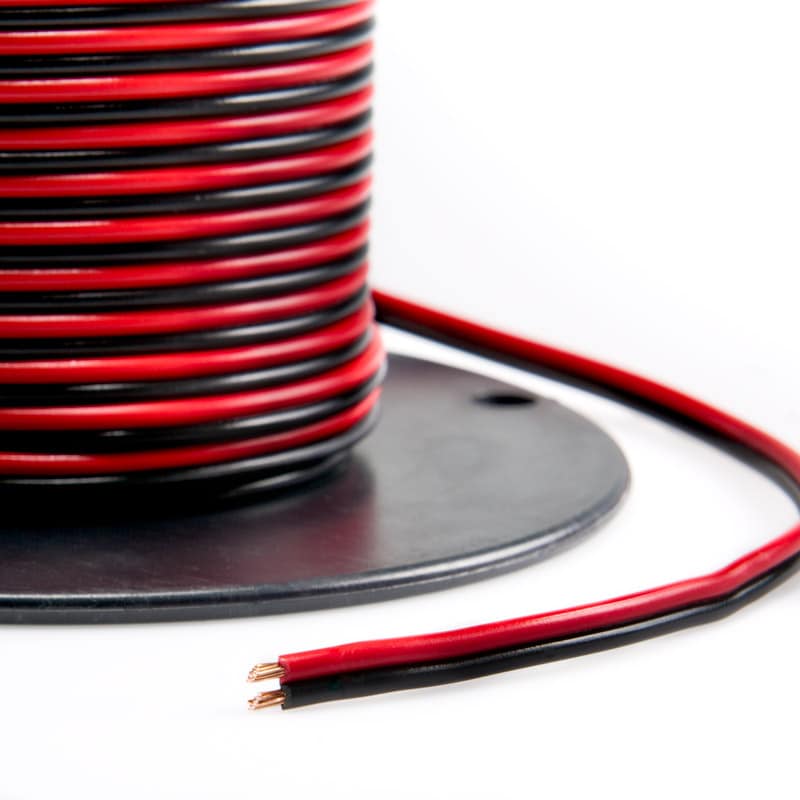
A number of people have asked us about the gauge of wire required between a device and the power supply. They also want to know how far away these two devices can be. This article describes how to select the right wire and calculate the maximum length of the wire.
Your surveillance IP camera, electric door lock, an audio amplifier, or even an electric heater needs a certain voltage and current to operate. When the power is transmitted across a wire there is a voltage drop caused by the resistance of the wire. If the surveillance camera (the load) is 500 ft. away from the power supply (the source), and it requires 12 VDC, what type of wiring is required to assure that the device gets the right power?
You could always use a very thick wire (low gauge), but that can cost a lot more than thinner wire (high gauge). To calculate the right wire and length you first need to understand a few electrical engineering concepts and equations.
What is the right lens and resolution for your IP camera? When you put together your IP camera system, you want to make sure that the camera you select for each location meets your expectations. It is important to first know the objectives for each area you are viewing. Do you want to identify a person’s face, a license plate, or just detect a person walking far away? In general, the more detail you want, the higher the resolution you need. This article shows you how to determine the viewing area and distance you should expect.
Resolution Required
Note: this article was updated on 8/15/2017 to correct an error in calculation.