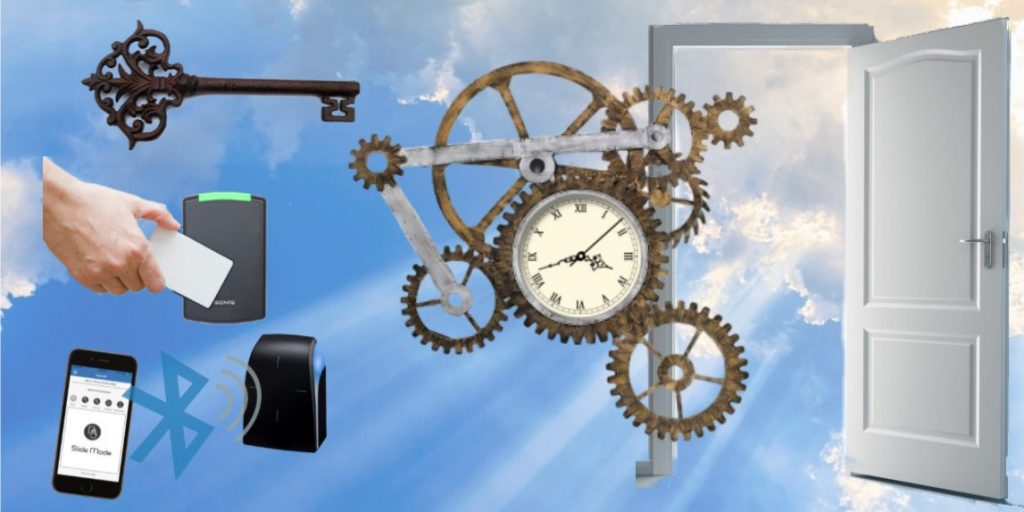
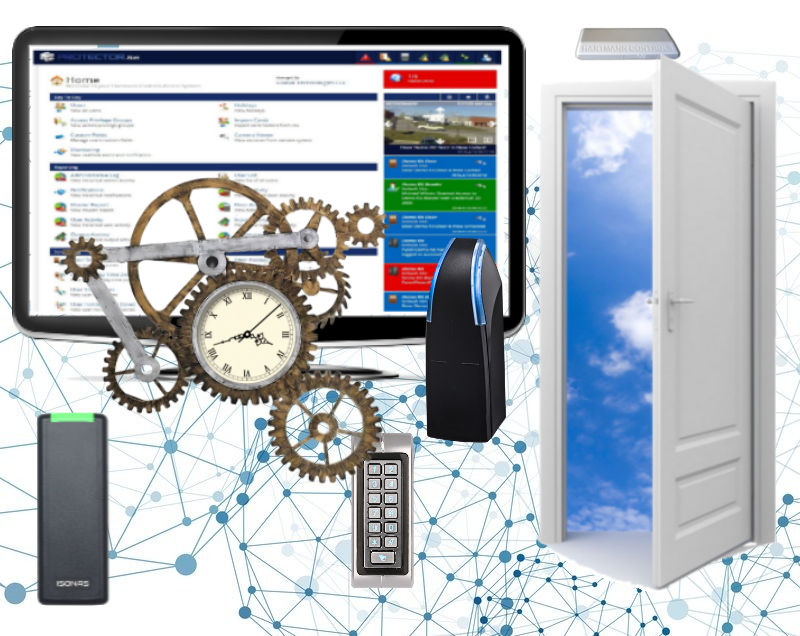
Access control is anything that is used to prevent the wrong people from gaining access to your secure area. A door lock and key control access. If you have a dog in your yard, with a big sign that says, “Beware of Dog!” You have access control. Access control always includes a key to allow entry. The dog only lets in the people it knows, so that’s the key.
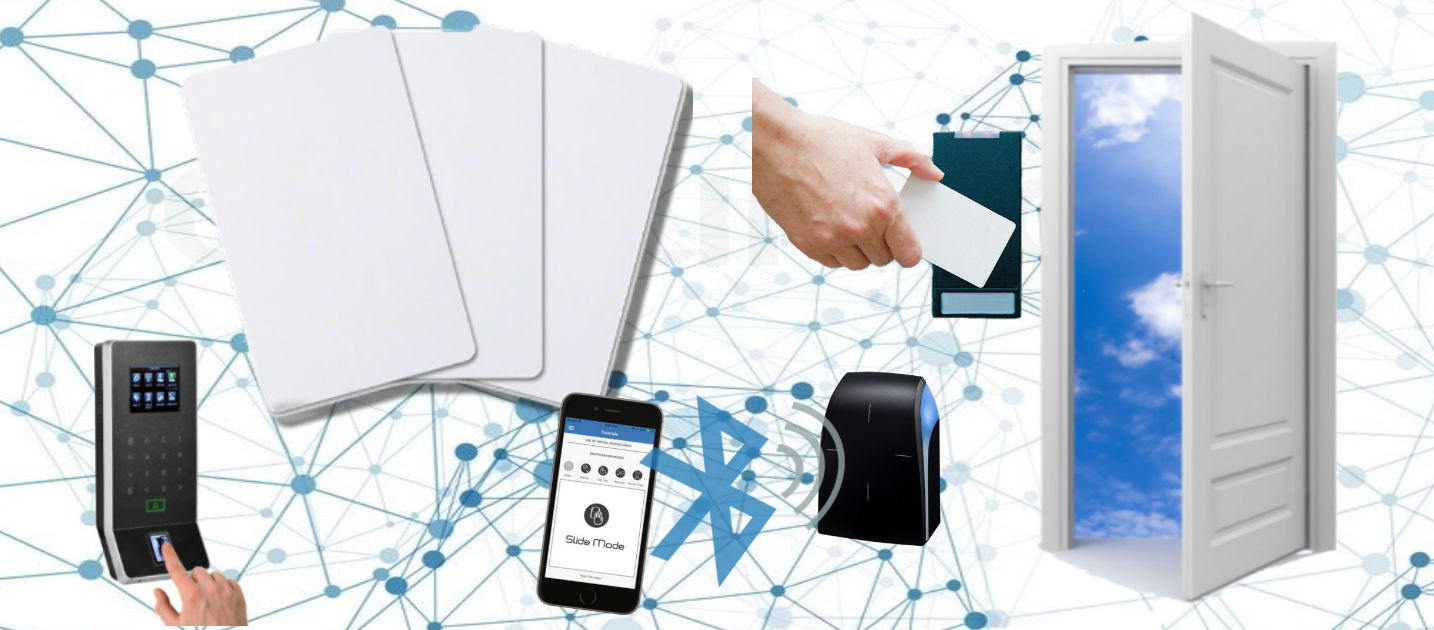
Door access control systems use various credentialsto unlock the door. Credentials can include physical cards that we carry, a PIN number we enter, or even the physical aspect of a person (biometrics such as fingerprint or facial recognition). This article compares the credentials that we carry. They are sometimes called keycards, prox cards, or smartcards.
What is the best IP paging system? There are several configurations and implementations that can be used depending on your requirements. In general, the PA over IP system is much easier to install than the older central paging amplifier systems.
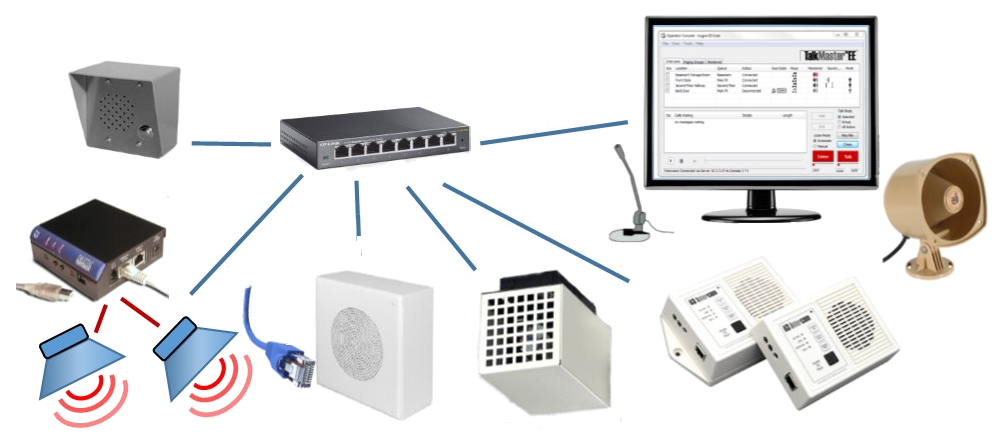
Instead of running wires from a central amplifier location, the IP paging systems use the network infrastructure that’s already in place. There is a choice of PoE powered speakers that attach to your network or small network-attached amplifiers that drive multiple speakers.
This article compares two types of implementation: the powered IP speakers, and the IP amplifiers with multiple attached speakers.
A fifteen-year-old boy came home with a Porsche, and his parents began to yell and scream, “Where did you get that car?!”
He calmly told them, “I bought it today.”
“With what money?” demanded his parents. “We know darn well what a Porsche costs.”
“Well,” said the boy, “this one cost me fifteen dollars.”
So the parents began to yell even louder. “Who would sell a car like that for fifteen dollars?!? And to a kid?!?” they asked.
“It was the lady up the street,” said the boy. “I don’t know her name – they just moved in. She saw me ride past on my bike and asked me if I wanted to buy a Porsche for fifteen dollars.”
“Oh my goodness,” moaned the mother, “she must be a child abuser. Who knows what she will do next? John, you go right up there and see what’s going on!”
Explosion-Proof Cameras, High-Temperature Viewing, and Other Enclosures for Extreme Environments
Unfortunately, the need for special equipment is only discovered after the first disaster. When electric power was first used in coal mines, the lethal explosions prompted the changes in the electrical engineering standards. It became apparent that sparks had to be prevented when there was coal dust or methane gas present.
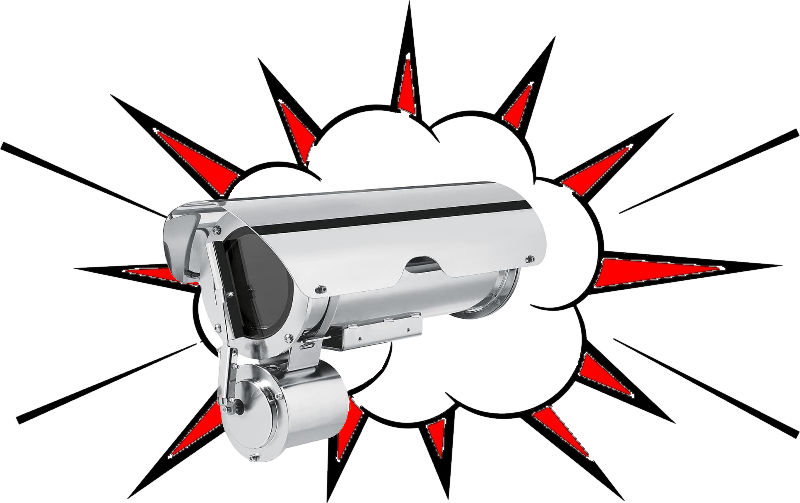
How do you prevent an explosion? What camera can you use on an oil rig or in a coal mine where the gases or dust could cause an explosion? How about a camera that can view the scorching gases of a rocket launching into outer space? These are not your standard CCTV surveillance cameras. Special explosion-proof enclosures are required.
The explosion-proof and other extreme environment cameras systems include special enclosures that protect the IP camera. This article reviews how industrial IP camera systems are protected in extreme environments.
Wouldn’t it be nice if it was easier to install IP cameras? After all, installation is a big part of the expense of an IP camera system. Some manufacturers provide IP cameras that are designed for easy installation. They thought about everything from how the cameras are placed in the box to the software tools that help with the final installation process. The installation time makes a big difference in the total cost of an IP camera system installation.
This article reviews the things that are part of an IP Camera system installation. We review the packaging, remote setup capability, and software management tools that reduce the time to install your IP camera system.
These three guys die together in a tragic accident and they all go to heaven.
When they get there, St. Peter greets them and tells them, “We only have one rule here in heaven. Don’t step on the ducks.”
So, they enter heaven and sure enough, there are ducks all over the place.
It’s almost impossible not to step on a duck there’s so many, and though they try their utmost to avoid standing on them, the first guy soon accidentally steps on one.
St. Peter then appears with the ugliest woman the guy had ever seen.
St. Peter chains the woman to the guy and says to him, “Your punishment for stepping on a duck is to spend eternity chained to this ugly woman!”
The next day, the second guy also accidentally steps on a duck. Once again, St. Peter shows up and with him is another extremely ugly woman. He chains the woman to the second guy saying, “Your punishment for stepping on a duck is to spend eternity chained to this ugly woman!”
What is the Best Access Control Management Software
Door access management software is an essential part of your access control system. It allows you to manage the door readers in your organization, enter credentials for each person, and manage all the people who will use the doors.
Most of the access management software available provides simple door reader management. You can control who, when, and where people can enter. What else do you need? It depends on your requirements.
Additional features will allow you to determine who is in the building, manage the system using your mobile device, lockdown the building in an emergency, and many other features. Here is a review of some of the things you may want to consider when you select your door access control system.
Comparison of The Topography of Access Control Systems
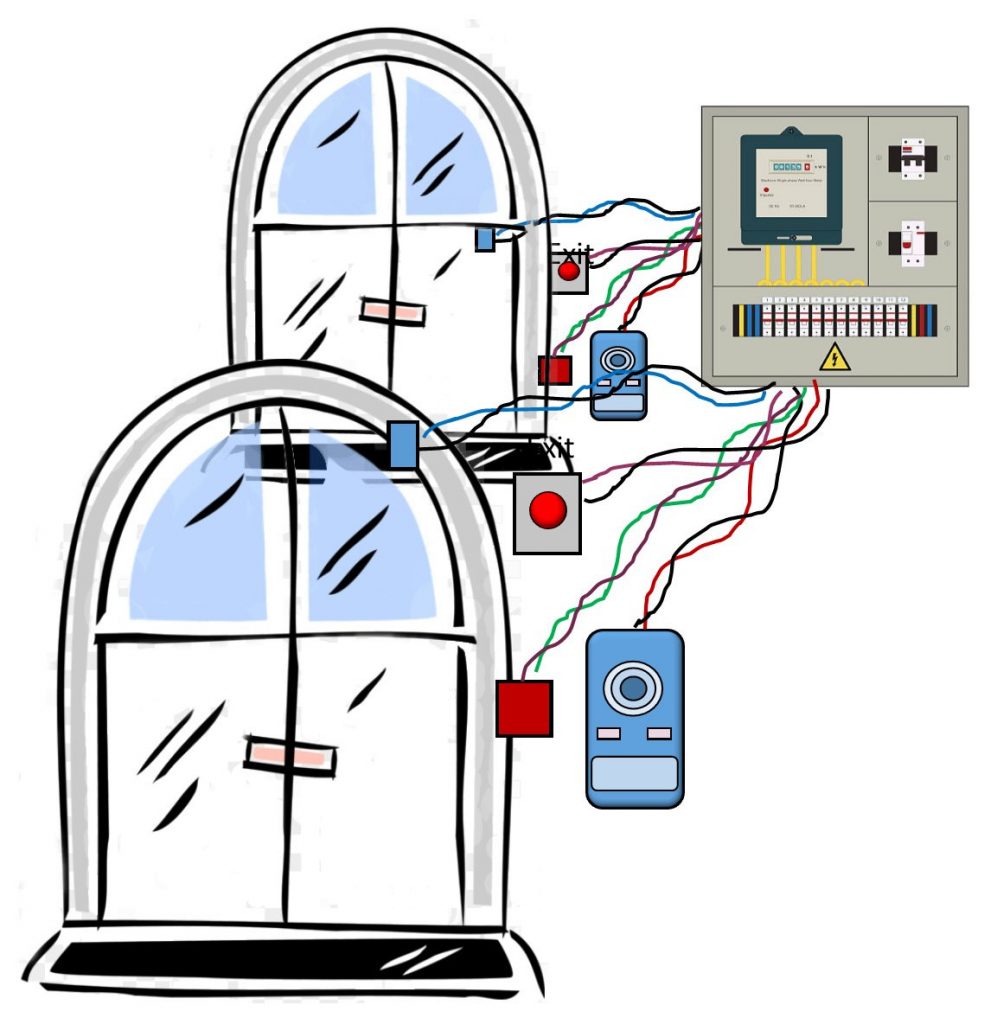
Access control systems used to be very complicated and difficult to wire. The early access systems used a central control box that connected to all the doors. The wiring was complex and expensive to install.
The latest access control solutions bring all the control functions to the door. This makes it easier to install, and simpler to expand. There are several systems that connect to the network but have different wiring schemes.
We compared the different access control systems and the benefits and disadvantages of each system configuration.
This article compares four types of door control systems. They all use access control management software that runs on your Windows computer. We provided the pros and cons of the different wiring topographies.