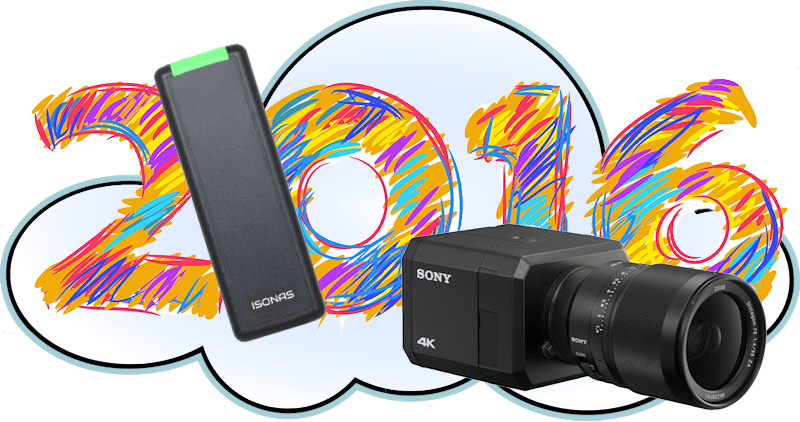
2016 will probably be known as the year of the 4K IP cameras. A number of manufacturers introduced these very high-resolution cameras.
Besides the increased camera resolution, new compression schemes were introduced that reduced bandwidth and storage requirements. The latest network-attached door readers are now controlled through the cloud.
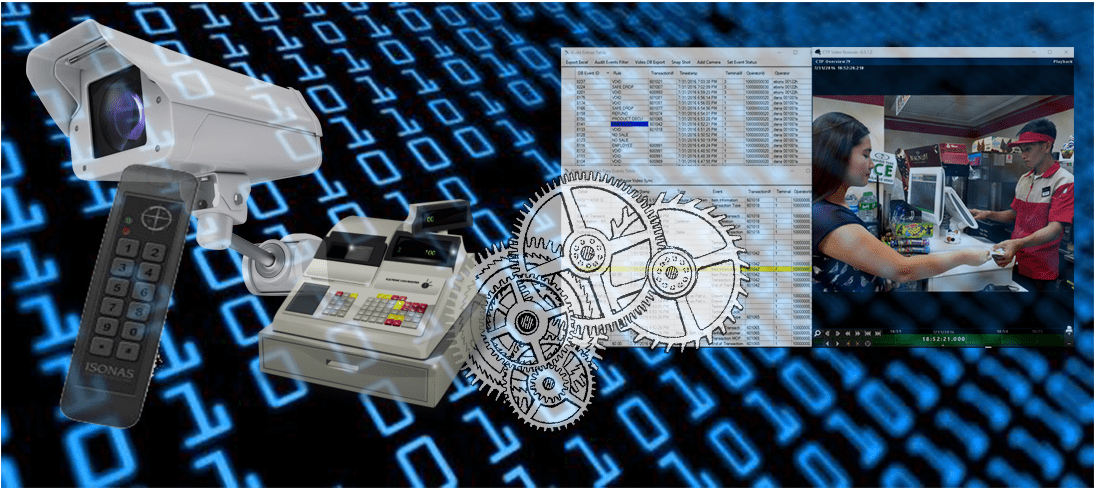
The readers also include Bluetooth connections that allow your smartphone to be used as the credential. Video management software was integrated with other devices like door access control and digital cash registers, increasing total security. Here’s a review of the technology introduced in 2016.
Fingerprint readers scan the features of a person’s finger and create a digital code that can be used as a unique digital template. That’s the concept, but how do fingerprint readers actually work?
There are a number of different technologies used to scan the features of a fingerprint. The engineering challenge is to reliably read the ridges and valleys on the fingerprint so that it can be converted to a digital image.
This article reviews the most popular technologies that use Optical, Ultrasonic and Capacitive sensors.
Fingerprint readers scan the features of a person’s finger and create a digital code that can be used as a unique digital template. That’s the concept, but how do fingerprint readers actually work?
There are a number of different technologies used to scan the features of a fingerprint. The engineering challenge is to reliably read the ridges and valleys on the fingerprint so that it can be converted to a digital image.
This article reviews the most popular technologies that use Optical, Ultrasonic and Capacitive sensors.
How important is your paging system? Is it critical that it continues to work reliably? Well, if your answer is yes, then paging over IP is a good choice for you.
What does IP Paging do that the older analog paging systems can’t do? It provides increased reliability and redundancy.
What happens if your analog amplifier stops working? Well, your paging system is down and out. There’s no easy recovery except to replace the amplifier. With a network attached IP paging system, all the amplifiers are decentralized, and the paging console station can be redundant, providing a much more reliable system. Here’s why IP paging systems are more reliable.
There was a break-in at your warehouse, but, you were prepared. Last month you installed a complete IP camera system. Now you have evidence you can share with the police.
Uh oh! You can’t identify their faces. There are two people in the warehouse, but you can’t tell who they are. Ugh! What did you do wrong? You have just discovered that having a surveillance camera, is not enough. You have to have the right resolution camera and the right lens.
This article reviews what you need to assure you meet your security objective.
On the first day of school, a first-grader handed his teacher a note from his mother. The note read, ‘The opinions expressed by this child are not necessarily those of his parents’.
A woman was trying hard to get the ketchup out of the bottle. During her struggle the phone rang so she asked her 4-year-old daughter to answer the phone. ‘Mommy can’t come to the phone to talk to you right now. She’s hitting the bottle.’
A little boy got lost at the YMCA and found himself in the women’s locker room. When he was spotted, the room burst into shrieks, with ladies grabbing towels and running for cover. The little boy watched in amazement and then asked, ‘What’s the matter, haven’t you ever seen a little boy before?’
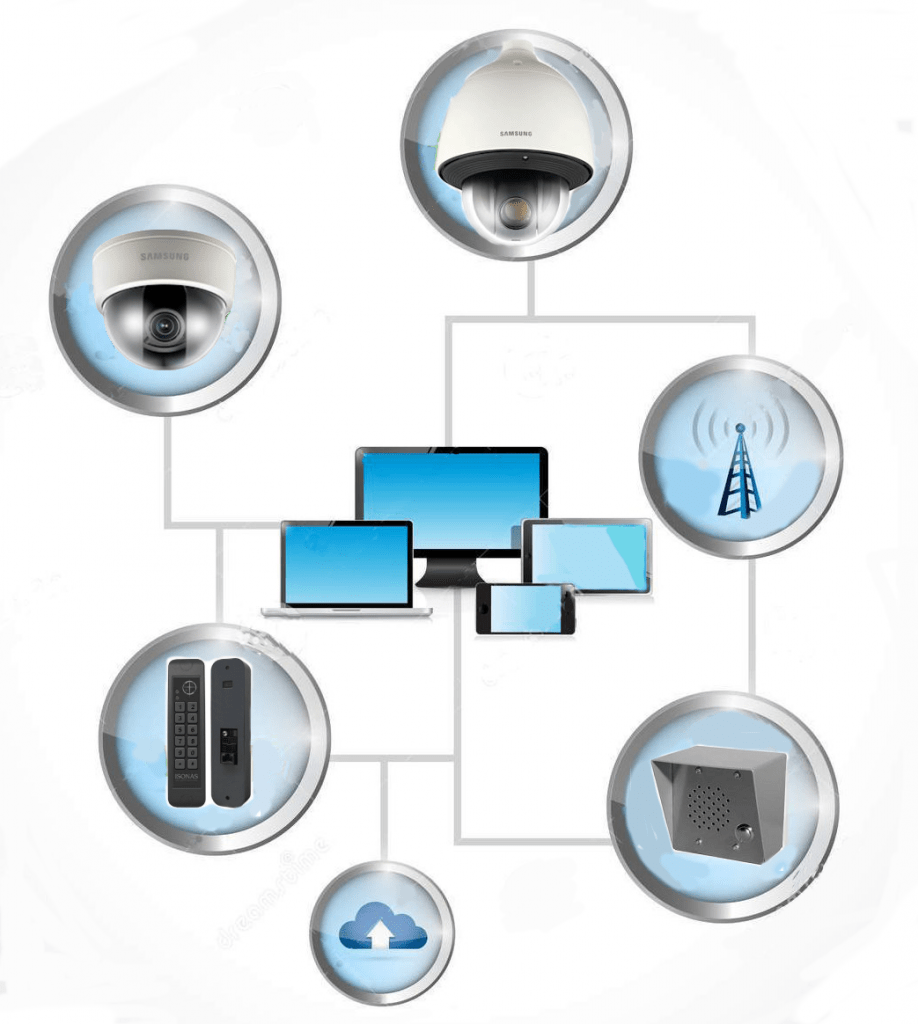
Door access control systems have become much more sophisticated, and easier to integrate with other security systems. These new IP door readers integrate with IP video systems, and IP intercoms, providing a much more secure environment.
The door access systems changed over 10 years ago with the introduction of IP door readers from Isonas. These new readers dramatically lowered installation costs and made it much easier to self-install these systems. This was a dramatic improvement over the older systems that used complex wiring harnesses to a central control panel.
There are new IP door readers that use cloud-based access control software. Now you can manage your door access from your mobile device. The latest door readers not only read the RFID card credentials, but they also recognize your fingerprint or face. They include multiple types of biometric keys that make them more reliable and secure. All these door access control systems can easily be integrated with IP camera systems and IP intercoms.
Here is a summary of the latest developments in door access control and how it integrates with other systems.
Resolution, Low Light, and Wide Dynamic Range Test and Shoot-out of 4K IP Cameras
By Francisco Gutierrez-Guerra
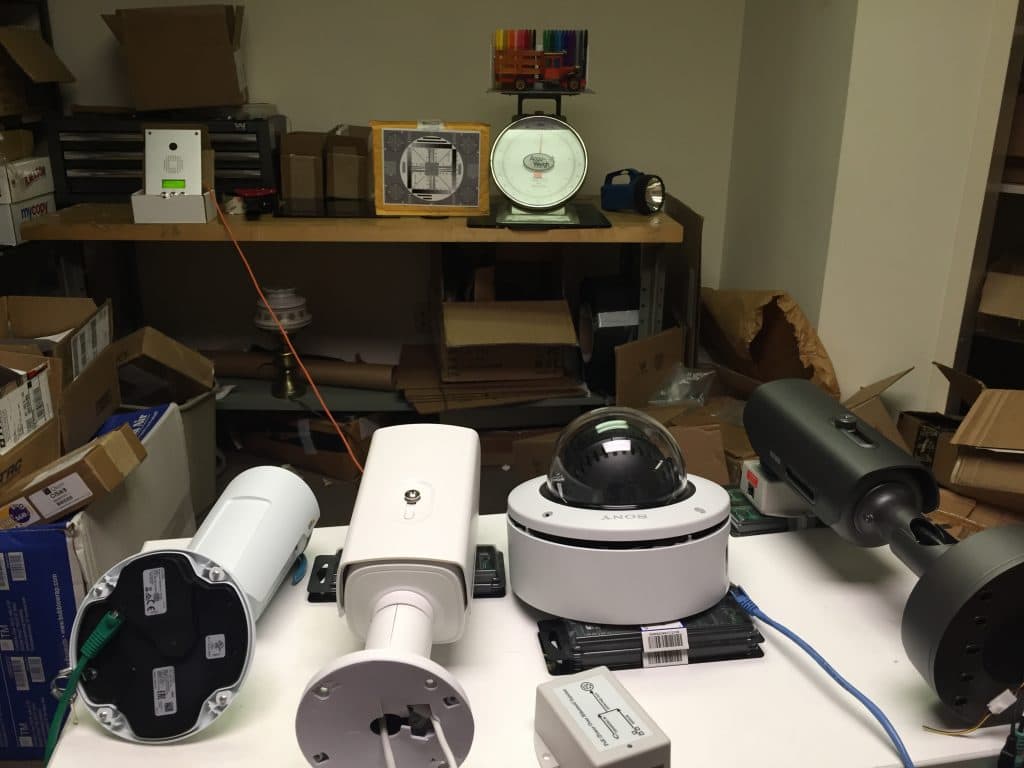
We tested and compared 4K IP cameras from Axis, Hikvision, Samsung, and Sony.
We tested the Axis P1428-E, the Hikvision DS-2CD4A85F-IZH, the Samsung PNO-9080R, and the Sony SNC-VM772R. We tested the resolution, low light capability, signal-to-noise, and wide dynamic range.
We also looked at the latest Sony SNC-VB770, which if you can afford it, is the best 4K IP camera we have seen. Here are the results of our testing.
Review of the methods for integrating IP Camera systems with IP door access or digital point of sale systems
By Bob Mesnik
C2P Convergence Concept
What’s next for Video Recording Systems? IP Camera manufacturers and third party companies such as OnSSI, Milestone, Axis, Exacq, and others have been providing software and NVR recording systems for many years. All these systems provide basic video recording functionality. How can the functionality and value of these recording systems be increased?
We reviewed a number of different systems and found that the next generation of video management systems (VMS) is already here.